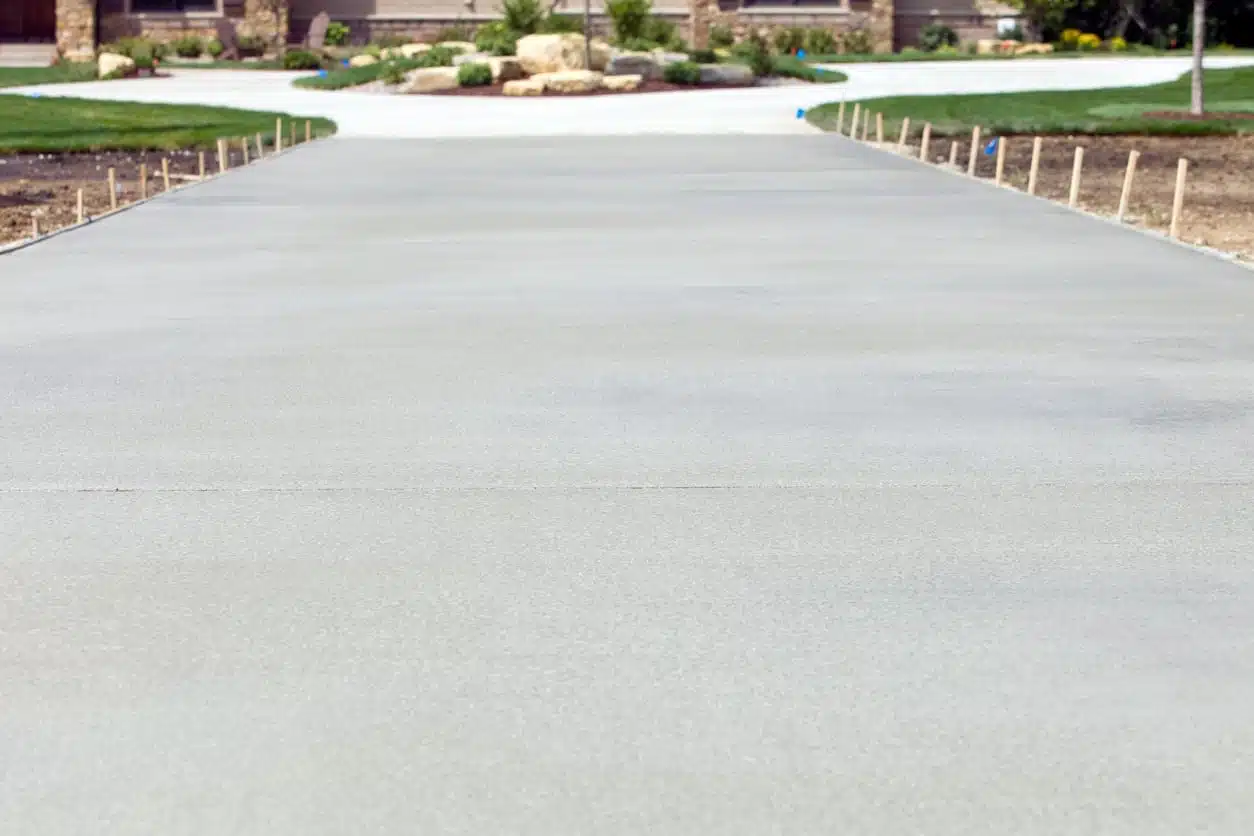
Concrete driveways, extremely prominent in southern areas of the country, need to be sealed in order to protect them from sun, rain, weathering and other exterior elements. Driveways and sidewalks are susceptible to wear on a daily basis from foot traffic and automobile traffic. In order to protect your driveway you need to use an industrial grade concrete driveway sealer.
With the multitude of sealers on the market how do you choose the best sealer for a driveway? When looking for a concrete driveway sealer look for a silane/siloxane blended sealer. By using a silane/siloxane you get the benefits of a penetrating and a topical sealer all-in-one. Other benefits of using a silane/siloxane on a driveway include the prevention of mold, mildew, efflorescence, sun, wind driven rain, salt degradation and hydrostatic pressure. You will literally be able to see the sealer working before your eyes; silane/siloxanes are known for their beading of water.
Silane/Siloxanes are extremely popular sealers sold from everywhere from local hardware stores, big box retail chains and online. Make sure to look for a silane/siloxane that will protect from salt, chlorides, freeze-thaw damage and water.
Our Take: Top driveway sealers are Siloxa-Tek 8500 and Okon S-40.

Polished concrete is one of the newer choices many people make for their concrete surfaces. Concrete naturally is a very porous material made from the mixing of water, Portland cement, and some sort of aggregate, such as stones, gravel, or sand. The mixture, when properly completed, results in the formation of concrete that features a large amount of tiny pores and hairline cracks that extend, web-like, throughout the concrete. While these pores and cracks do not overly inhibit the concrete’s strength, they can be the cause of future damage.
To make sure your concrete is as strong as it possibly can be, as well as protected from potential future harm, you need to make sure you seal your concrete with the appropriate concrete sealer. However, the situation changes slightly if you decide to polish your concrete. Polishing concrete is a choice many people make because it grinds down the surface of the concrete to transform the pockmarked natural surface into a smooth, shiny expanse of concrete. These types of floors are typically found in large retail stores, such as Home Depot, as well as a number of other venues.
While the polishing process is as simple as renting a concrete grinder and following the instructions from there on, there is a crucial step that many people skip. Skipping this step, of course, can result in absolute disaster for the concrete, leading to excessive cracking, crumbling, and general degradation that can necessitate costly repairs.
Before you can polish concrete, you need to increase the strength and density of the slab. Polishing pushes the concrete’s structural integrity to the brink, which can be problematic for untreated concrete. In order to ensure a successful concrete polishing process, you need to treat the concrete slab with a concrete densifier. The best choice for this project would be a lithium silicate/siliconate. These types of sealer are the strongest densifiers on the market, featuring deep penetration and comprehensive chemical reactions that create more calcium silicate hydrate (or CSH) that gives concrete its noted strength. Once the lithium silicate sealer has been properly applied, the concrete can be polished without fear of damage caused by untreated concrete.
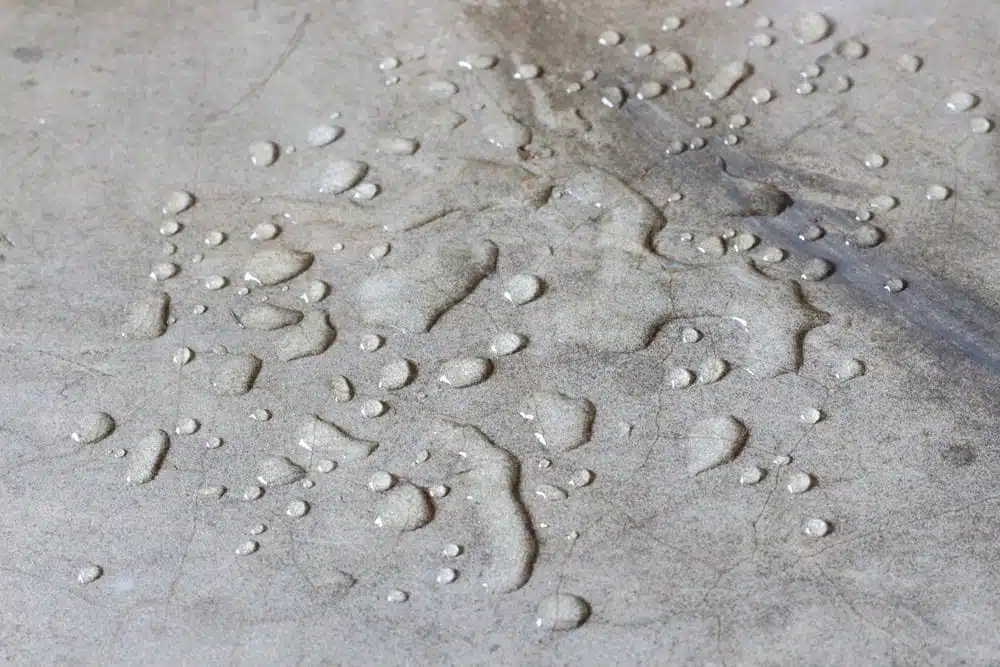
While many concrete sealers claim to offer protection from water damage, most only offer some degree of water resistance. If you are looking for a true water repellent sealer, for instance, an acrylic will not really give you the protection you have in mind. Water repellent sealers are different from penetrating sealers because they are surface sealers. A good example to picture the protection offered by a water repellent would be that they act like a raincoat does. When applied to the concrete, the water visibly beads before sliding off, keeping the concrete dry underneath.
Just like penetrating sealers, water repellent sealers are appropriate for certain types of projects. A delicate piece of concrete cannot be treated with a concrete densifier or any other type of penetrating concrete sealer. Instead, a water repellent sealer is more appropriate, as these types of sealers feature large particles of sealant that cannot penetrate past the tiny surface pores natural to concrete. In order to ensure the concrete sealer is applied properly, you just need to pour out the sealer onto the concrete before spreading it out across the surface of the material.
If you are looking for a sealer that repels water, your best choice would be a silane/siloxane type of sealer. Be sure to look for a water-based variety that offers comparable levels of protection to solvent-based counterparts. Silane/siloxane sealers are made up of a blend of penetrating silane particles combined with surface-level siloxane particles. These two types of particles of chemical sealant function in concert to create a hydrophobic barrier that will block out water and excessive moisture from entering the concrete. The two types of sealant particles ensure that the surface of the concrete retains the most thorough possible protection, while the concrete itself is also protected in case any water seeps through the primary surface level of protection.
Our Take: Water repellents we recommend are Okon S-40 or Siloxa-Tek 8500
If you live in an area with a warmer climate, such as in the West or the South, then there is a strong possibility that your driveway will be made from concrete. Concrete driveways also appear in colder climates, though asphalt tends to be the preferred method of construction, as it holds up to colder seasons better than traditional concrete.
Either way, wherever your home is located, having a concrete driveway means you are at risk for the various problems that can plague exterior concrete. Concrete, while strong and long-lasting, can suffer from cracking, spalling, crumbling, and a general degradation over time with prolonged exposure to the elements. As concrete is dotted with tiny pores all across its surface, these pores can allow water, salts, and other debris to enter to the concrete’s microscopic network of pores and hairline cracks. The incursion of water, salts, and such can be disastrous for the concrete driveway, as the concrete can degrade over time from within.
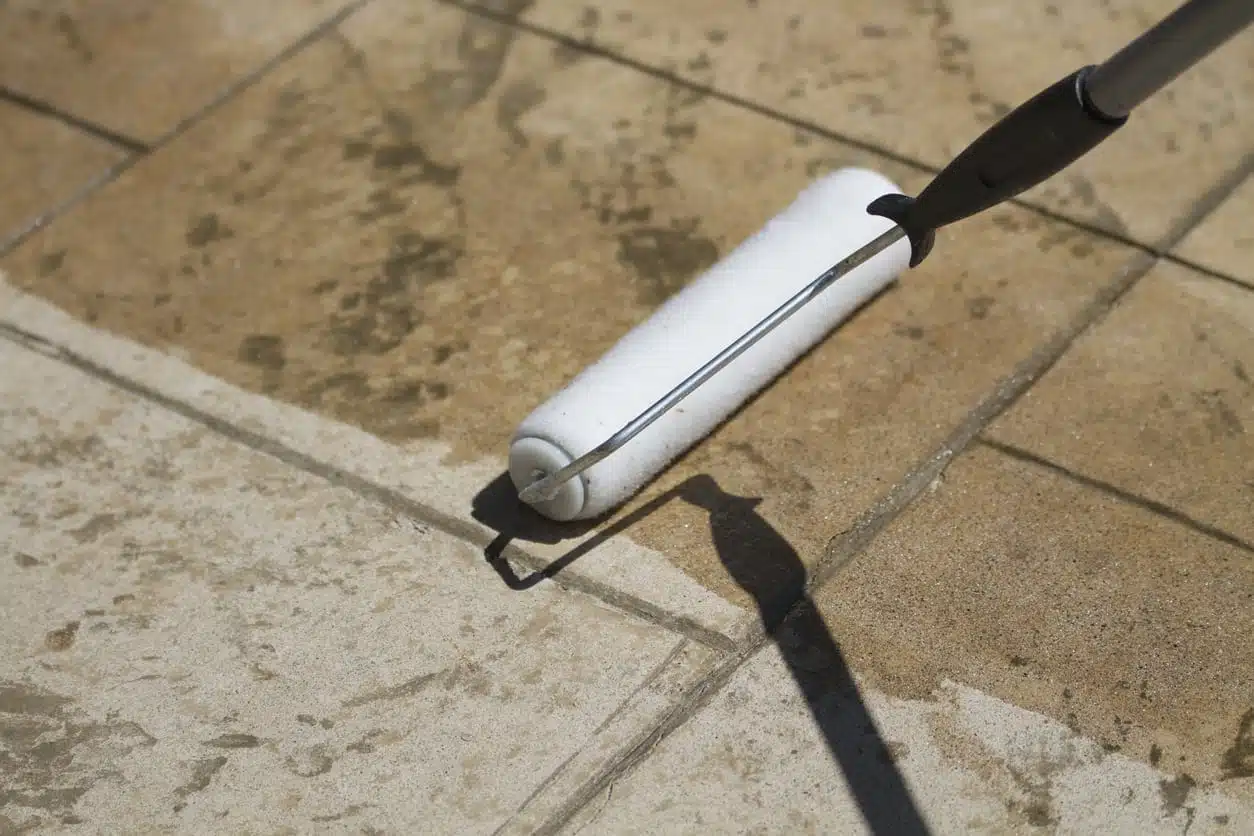
Fortunately, there is an easy solution to prevent the degradation of your concrete driveway. Whether you live in a warmer or colder climate, you will want to use an acrylic sealer on your delicate pavered driveway. Pavers are a type of concrete with larger pores that is, accordingly, more porous. The increased porosity of the concrete makes penetrating sealers a bad option for protecting the surface from degradation. Therefore, the best option remaining is a surface sealer, like an acrylic.
You will likely want to choose an acrylic sealer that is a water-based solution, as these are easier to apply while also being safer for yourself, your family, and the environment. These sealers are full of large particles of acrylic sealant that pool on the surface of the concrete driveway to be spread out evenly over the course of the application. Once spread out properly, the sealer will provide comprehensive surface-level protection.
Our Take: The top acrylic sealers for exterior driveways are Cryli-Tek 5505 and Everclear
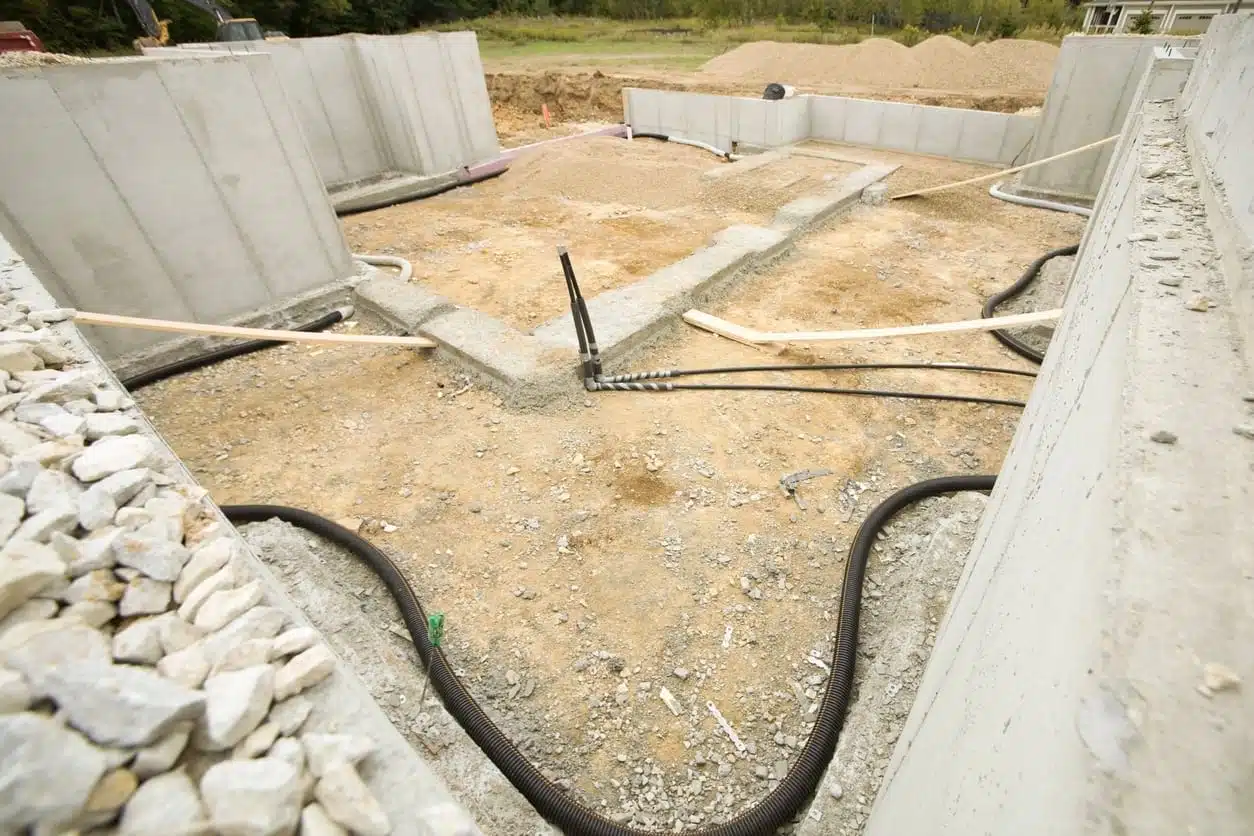
While water damage is an obvious potential damage a home or building owner has to worry about when it comes to concrete, there are other potentially harmful things that you may not even notice. The passage of radon, a gas linked to cancer, through your concrete into your home or building is one of these. Concrete, by its very nature, has a large amount of tiny pores and hairlines cracks that extend throughout it. Beginning at the surface, these pores can allow gases like methane and radon to pass through your concrete with little problem.
While concrete as a structural material often makes it the only choice for construction, regardless of drawbacks like the passage of radon, you can easily defend your home or building from this potentially carcinogenic gas. Radon is a colorless, tasteless, and odorless gas that is actually the second greatest cause of lung cancer, after smoking, according to the U.S. Environmental Protection Agency. In order to know if radon is afflicting your home or building, you need to get a radon test kit and follow the instructions. As the gas cannot be tasted or smelled, these test kits are really the only way to know if radon is plaguing your home.
If you have radon in your home, a possible cause could be that it is coming through the concrete. Therefore, the solution to this problem would be to use a quality concrete sealer specifically designed to block out radon, methane, and similar harmful gases. A surface sealer is not a great choice, as it would not comprehensively block out the gas. The best choice for a concrete sealer is a silicate sealer. Silicate sealers are part of the class of penetrating sealers, coming in sodium or lithium forms. The particles of silicate in the sealer will penetrate past the surface pores of the concrete into the material. Once here, they will react with various minerals already present within the concrete to chemically produce more calcium silicate hydrate (CSH). The production of CSH will block the pores and cracks through which radon and similar gases can travel, helping ensure your home remains adequately protected.
Our Take: A radon reducing sealer that can be used is Radonseal.

Interesting Posts
-

The Definitive Guide to Concrete Sealers (2025 Edition)
Concrete is strong, but it’s not invincib... -
What Type of Sealer is Best for Concrete
What Type of Sealer is Best for Concrete? When ... -
Ghostshield Epoxy Max 100 Review
Ghostshield Epoxy Max 100 : A High-Performance ... -
Eco Advance Concrete/Masonry Siloxane Review
The Eco Advance Concrete/Masonry Siloxane Odorl... -
Aqua Mix Sealer’s Choice Gold Quart Review
Aqua Mix Sealer’s Choice Gold Quart is a ...


ABOUT US