
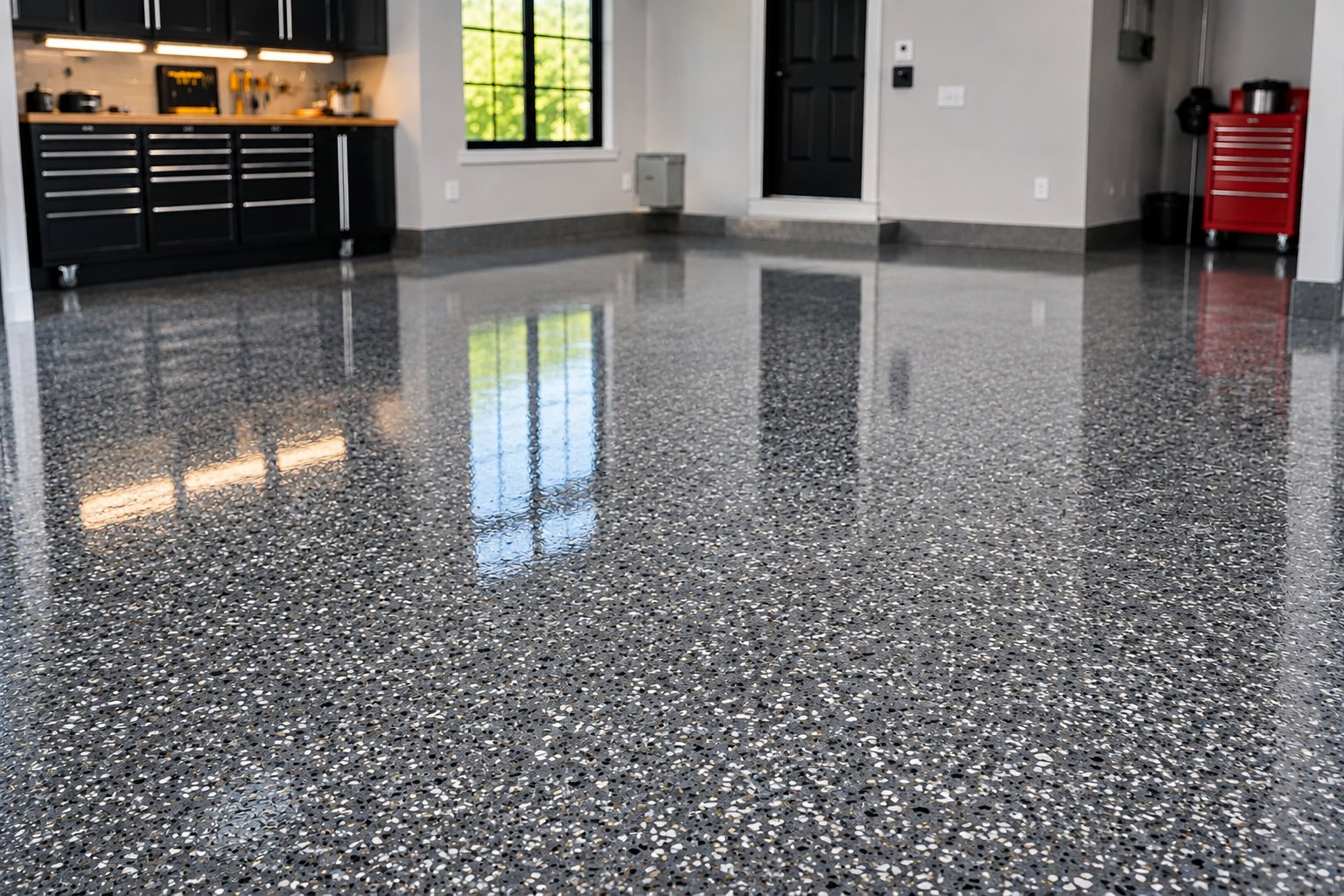
An epoxy floor is only as good as the person who installs it. The same coating can last 15 years or peel in one season, and the difference is almost always prep, moisture testing and installer experience. This guide covers what to look for in an epoxy floor installer, the questions to ask before you sign, the red flags to avoid, and, for contractors, how a certified installer program compares with buying a franchise.
What to Look for in an Epoxy Floor Installer
- Mechanical surface prep. Good installers diamond grind or shot blast the slab. Acid etching alone, or “just cleaning,” is the most common cause of peeling floors.
- Moisture testing. Ask how they test for moisture (calcium chloride or relative humidity testing) and what they do if the slab fails, such as a moisture-mitigating primer.
- Real coating systems. Look for a 100% solids epoxy base coat and a UV-stable topcoat such as polyaspartic or urethane, not a thin one-part “epoxy paint.”
- A written warranty that spells out what’s covered (peeling, delamination, hot-tire pickup) and for how long.
- Licensing and insurance for your state or town.
- A portfolio and references of floors at least a year or two old, not just fresh install photos.
- Manufacturer certification or training with the products they install.
Questions to Ask Before You Hire
- How will you prepare my concrete, and what equipment do you use?
- Will you test for moisture first? What happens if it fails?
- What products and how many coats are you using, and at what thickness (mils)?
- How do you handle cracks, joints and spalled areas?
- What topcoat do you use, and is it UV-stable?
- How long before I can walk on it, and before I park on it?
- What does your warranty cover, and who backs it: you, the manufacturer, or both?
- Can I see a floor you installed a couple of years ago?
Red Flags
- A quote far below everyone else’s, usually a sign of skipped grinding or a thin coating.
- One-day “epoxy” over an unground slab with no moisture test.
- No written warranty, or a warranty that excludes peeling.
- Pressure to pay most of the job upfront.
- Vague answers about the products being used.
What an Epoxy Floor Should Cost
Price depends on the size and condition of the slab, the coating system (solid color, flake or metallic) and your region. Flake and metallic systems with full grinding and a polyaspartic topcoat cost more than a single solid-color coat, but they last far longer. Get at least three written quotes that list the prep method, products and number of coats so you can compare them fairly.
Certified Installer Networks: Epoxy Max
One way to narrow your search is to use a manufacturer’s certified installer network. Epoxy Max, Ghostshield’s professional floor coating brand, trains and certifies independent installers on its systems, including Epoxy Max 100 epoxy and polyaspartic topcoats. You can find a certified Epoxy Max installer and see finished floors in the Epoxy Max gallery.
For Contractors: Epoxy Max Installer vs. Epoxy Max Franchise
If you install floors yourself, you may see two ways to work with the Epoxy Max name: the Epoxy Max certified installer program, and the Epoxy Max franchise advertised at epoxymaxpro.com and epoxymaxfranchise.com. They’re different business models, and the better fit depends on where your business is today.
| Certified Epoxy Max installer | Epoxy Max franchise | |
|---|---|---|
| Franchise fee | None | A franchise fee, typically paid upfront |
| Royalties | None | Ongoing royalties, usually a percentage of sales, often plus marketing fees |
| Product and equipment pricing | Same pricing as franchise owners | Set by the franchise agreement |
| Territory | Exclusive territory available, without being confined to it | Territory set by the franchise agreement |
| Your business | You keep running your own company and brand | You operate under the franchise’s brand, system and rules |
| Support | Leads through the installer directory, marketing tools, Epoxy Max branding, training and technical support | Brand marketing plus a franchise operating system: training and an operating playbook |
| Often a good fit for | Contractors already in business with a crew, equipment and customers | Newcomers who want a turnkey system and are comfortable with fees and royalties |
Whichever route you’re considering, compare the total cost over several years, including franchise fees, royalties and product pricing, not just the upfront price, and read every agreement carefully. You can learn more about becoming a certified Epoxy Max installer, and request the franchise’s FDD before you decide.
Epoxy Floor Installer FAQ
Should I hire a pro or DIY an epoxy floor?
A careful DIYer can install a solid-color or flake floor with a quality kit, but grinding equipment, moisture problems, metallic finishes and large or commercial floors are best left to a professional. See our best epoxy floor coatings if you’re going the DIY route.
How long does a professionally installed epoxy floor last?
With proper grinding, moisture control and a quality topcoat, a professional epoxy floor commonly lasts many years in a residential garage. Floors installed over poorly prepared or damp concrete can fail within the first year.
Is the Epoxy Max franchise the same as Epoxy Max installers?
No. They’re two different programs. Certified Epoxy Max installers are independent contractors who pay no franchise fee or royalties. Epoxy Max franchise owners pay a franchise fee and ongoing royalties in exchange for a franchise system and territory.
