Affiliate disclosure: Some links on this page are affiliate links. As an Amazon Associate we earn from qualifying purchases, at no extra cost to you.
Choose a wet-look sealer if you want colored, stamped or exposed-aggregate concrete to look richer and glossier, and you’re willing to reseal more often and add an anti-slip grit. Choose a natural-finish (penetrating) sealer if you want plain concrete to look the same as it does now, stay as slip-resistant as it is today, and let moisture vapor escape. The difference comes down to how the sealer works: wet-look sealers form a shiny film on top of the concrete, while most natural-finish sealers soak in and protect from the inside.
What “Wet Look” and “Natural Finish” Actually Mean
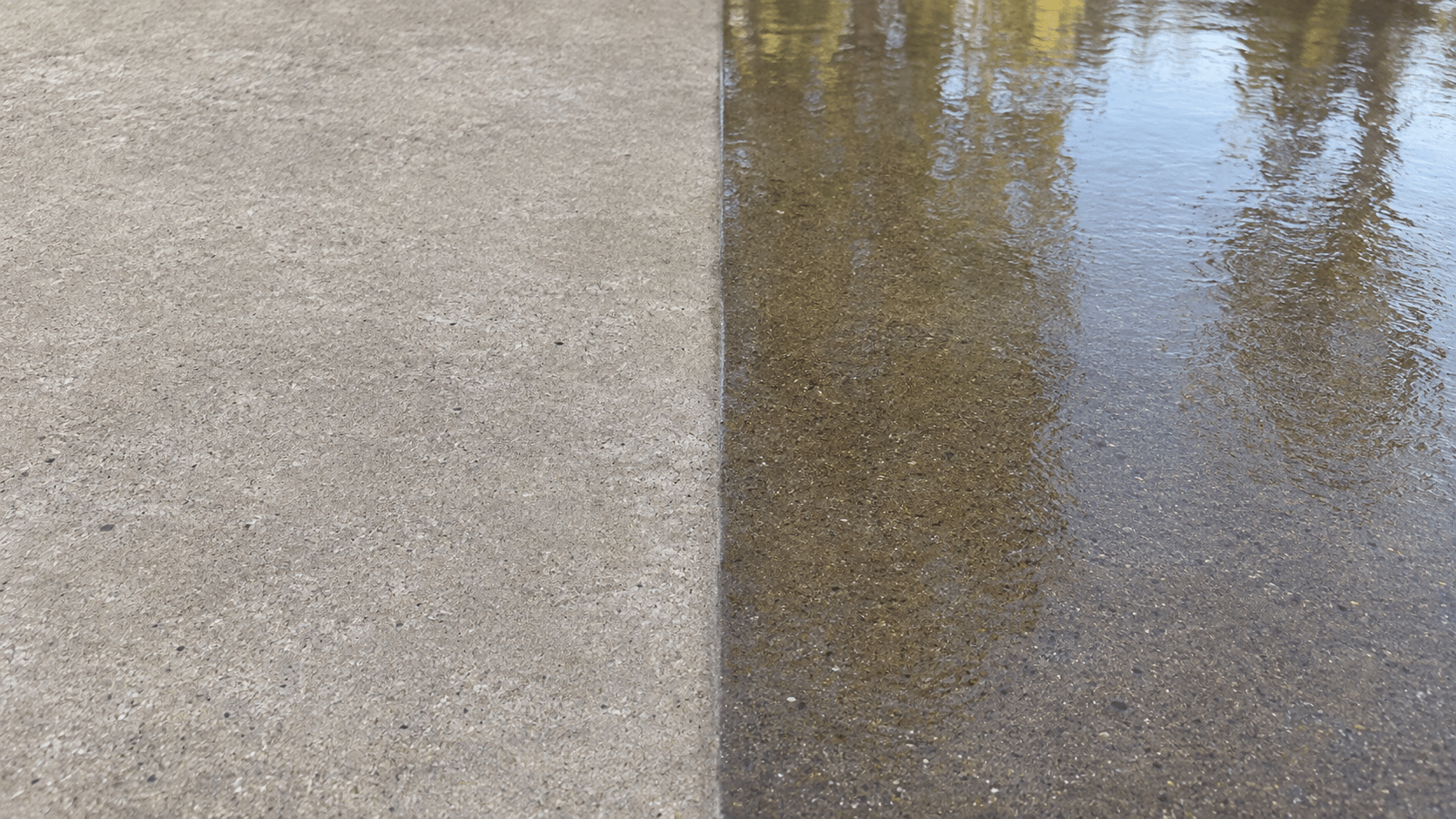
A wet-look sealer is a film-forming (topical) product, usually an acrylic, though polyurethanes and epoxies can also give a high gloss. It leaves a thin coating on the surface that darkens the concrete and reflects light, so the slab looks like it was just hosed down. The more solids a sealer contains, the thicker the film and the higher the gloss.
A natural-finish sealer usually means a penetrating product such as a silane, siloxane or a silane/siloxane blend. These soak into the pores and react inside the concrete, so there’s no film on top. Once dry, the surface looks about the same as unsealed concrete, but water beads up instead of soaking in. Some brands also sell low-sheen or matte acrylics labeled “natural look.” Those are still thin films, just with less shine, so read the label to see which type you’re buying.
| Wet-Look (Film-Forming) | Natural Finish (Penetrating) | |
|---|---|---|
| Appearance | Glossy, darker, color-enhanced | Little or no visible change |
| How it works | Forms a film on the surface | Soaks in and repels water from within |
| Slip resistance | Can be slippery when wet | Doesn’t make concrete more slippery |
| Breathability | Lower; can trap moisture | Most products let vapor escape |
| Upkeep | Wears, needs resealing more often | Reapply when water stops beading |
| Best for | Stamped, colored, exposed aggregate, pavers | Plain driveways, sidewalks, pool decks, steps |
How Each Finish Changes the Look of Your Concrete
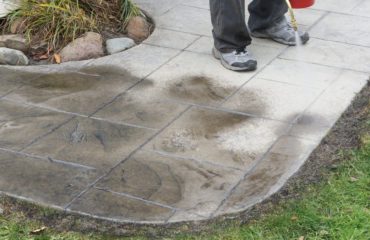
Wet-look sealers are popular on decorative work for a reason. On stamped concrete with color hardener and antiquing release, a film-forming acrylic deepens the colors and makes the pattern stand out in a way a penetrating sealer can’t. Exposed aggregate gets the same boost, with the stones looking polished and bright.
The type of acrylic matters too. Solvent-based acrylics generally darken and enhance color more and dry to a shinier finish. Water-based acrylics give a more moderate color boost and often a satin look, which some homeowners prefer. If you’re unsure, test a small out-of-the-way spot first, because the darkening can be stronger than you expect.
Penetrating sealers are close to invisible. Some can darken the surface slightly, but on plain gray concrete most people won’t notice a change once it’s dry. That’s ideal if you like the look of your driveway and just want to keep water, salt and stains out.
Safety and Traction
This is the biggest practical difference. A glossy film on smooth concrete can be very slippery when wet, and that matters on steps, sidewalks, pool decks and anywhere sprinklers hit. Stamped or heavily broomed surfaces keep more texture and offer more traction, but they can still get slick.
If you use a wet-look sealer outdoors, mix in an anti-slip (grit) additive made for that sealer before you apply it. It helps, but it won’t make the surface completely skid-proof. Penetrating sealers don’t change the surface texture, so they won’t make your concrete any more slippery than it already is.
Durability and Maintenance
Acrylic films are thin and wear faster than thicker coatings like polyurethane or epoxy. Foot traffic, tires, UV and weather slowly dull the gloss, so a wet look usually needs resealing more often than a matte or penetrating finish. High-traffic spots like the tire paths on a driveway tend to wear first. When you reseal, stick with the same chemistry: water-based over water-based and solvent-based over solvent-based.
Penetrating repellents last a long time but aren’t permanent either. Reapplication timing varies widely by product and exposure, so follow the label and use the simple water test: if water stops beading and starts darkening the concrete, it’s time to reapply. Because there’s no film, there’s nothing to peel, flake or strip later. For more on timing, see our guide to how long concrete sealers last.
Moisture: Why Breathability Matters
Concrete constantly moves moisture up from the ground. Most penetrating sealers are breathable, letting that vapor escape while still blocking liquid water. Film-forming sealers are less forgiving. If a film goes down over damp concrete, or the slab has a lot of moisture coming up from below, the coating can haze, turn white or lose its bond. Make sure the slab is clean and fully dry before applying a wet-look sealer, and avoid it on slabs with a known moisture problem.
How to Choose: A Quick Checklist
- Look at the surface. Stamped, colored, stained or exposed-aggregate concrete is the best case for wet look. Plain gray broom-finished concrete usually doesn’t gain much from gloss.
- Think about traffic and safety. For steps, walkways and pool decks, lean toward a natural finish, or plan on an anti-slip additive with a wet look.
- Consider your climate. Where freeze-thaw cycles and deicing salt are a concern, a penetrating water repellent protects the concrete itself and doesn’t add a film that can wear or peel.
- Check what’s already on it. If the concrete already has an acrylic, you’ll usually reseal with a compatible acrylic. Penetrating sealers need bare, porous concrete to soak in, so an existing film may need to be removed first.
- Decide how much upkeep you want. A wet look looks great but asks more of you. A natural finish is closer to “apply it, then recheck with the water test.”
Want both? Some contractors apply a penetrating repellent first and then a thin acrylic topcoat for shine, with the sheen controlled by the number of topcoats. Check that the products are compatible and that the label allows topcoating.
To compare specific products, start with our roundups of the best acrylic concrete sealers and the best penetrating concrete sealers. For wet-look options, our BEHR Premium Wet-Look Sealer review and Eagle Supreme Seal review cover two common store-shelf choices.
FAQ
Can I put a wet-look sealer over a penetrating sealer?
Sometimes. Some systems are designed for it, but a water repellent can also keep a topcoat from bonding well. Only do it when both manufacturers say the products are compatible, and test a small area first.
Will a natural-finish sealer change the color of my concrete?
Usually very little. Some penetrating sealers slightly darken the surface, so test a hidden spot if an exact match matters to you.
Is a wet-look sealer a good idea on a pool deck?
It can be, but only with an anti-slip additive, because wet bare feet on a glossy film is a slip risk. Many homeowners choose a natural finish instead. See our guide to the best wet look sealer for pool decks if you want the glossy look.
Can I switch from wet look to natural finish later?
Yes, but you’ll usually need to strip the old film first so the penetrating sealer can soak into bare concrete. Our guide on how to remove a concrete sealer walks through the options.
Summary
Wet-look sealers form a glossy film that makes decorative concrete pop, but they’re more slippery, less breathable and need resealing more often. Natural-finish penetrating sealers keep concrete looking the way it does now, protect it from the inside and don’t change traction. Pick wet look for stamped, colored or exposed-aggregate surfaces where appearance matters most. Pick natural for plain driveways, walkways, steps and pool decks, and always follow the label on the product you buy.