Affiliate disclosure: Some links on this page are affiliate links. As an Amazon Associate we earn from qualifying purchases, at no extra cost to you.
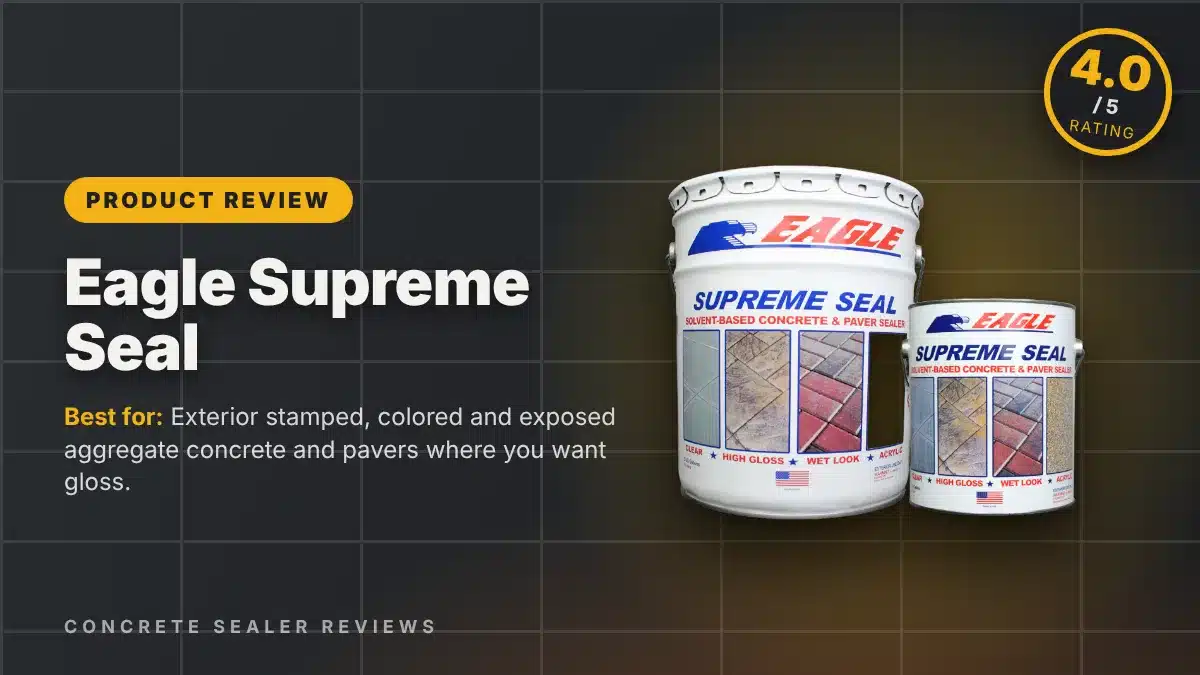
Eagle Supreme Seal is a solvent-based, pure acrylic sealer that gives exterior concrete and pavers a high-gloss “wet look.” It’s a good fit for homeowners who want stamped, colored or exposed aggregate concrete to look richer and darker. The bottom line: it delivers the glossy look people buy it for at a fair price, but it’s strong-smelling, exterior-only, and like any wet-look acrylic it needs proper prep and periodic resealing.
| Type | Film-forming topical sealer |
| Chemistry | Solvent-based pure acrylic (aromatic naphtha solvent) |
| Finish | High gloss, wet look; non-yellowing per manufacturer |
| Coverage | 300 sq ft/gal smooth; 200 textured, stamped or broom; 100 exposed aggregate and pavers (two thin coats) |
| Coats | 2 thin coats, second rolled perpendicular to the first |
| Dry/recoat | Second coat once the first is tack-free |
| Cure | Foot traffic 4 hours; vehicles 48 hours |
| Best for | Exterior stamped, colored, broom-finish and exposed aggregate concrete; concrete pavers |
| Not for | Interiors without full ventilation, clay brick, natural stone, polished or densified concrete, painted surfaces |
| New concrete | For cured concrete; no specific wait stated, and the surface must not have a recent curing compound |
Watch: Eagle Supreme Seal in 60 seconds
What It Is / How It Works
Supreme Seal is a topical acrylic sealer. Unlike a penetrating silane or siloxane, it lays down a thin plastic-like film on top of the concrete. That film darkens and saturates the color underneath, adds gloss, and blocks water, salt and many stains while it's intact. Eagle's data sheet calls it a "pure acrylic non-yellowing solvent-based clear sealer" and says it meets or exceeds ASTM C1315, a common standard for curing and sealing compounds.
Because it's solvent-based, it soaks into the surface a bit more than many water-based acrylics and tends to give a deeper wet look. The tradeoff is a combustible product with a strong odor. The standard version lists VOC under 700 g/L, which means it can't be sold everywhere. Eagle also makes Low VOC (EVTU1) and CARB-compliant (EUVC1) versions of Supreme Seal for stricter states. The common retail sizes of the standard formula are 1 gallon (EU1) and 5 gallon (EU5).
Where It Works Best (and where it doesn't)
Supreme Seal is made for exterior decorative concrete: stamped patios, colored pool decks, exposed aggregate walkways, broom-finished driveways and concrete pavers. The surface needs to be porous enough to absorb water. Very dense or smooth troweled concrete should be etched first so the sealer can grip.
Eagle lists a long set of surfaces to avoid: clay brick, slate, stone slabs, granite, travertine, glazed tile, terrazzo, polished or densified concrete and painted surfaces. It's also not recommended over water-based stains or colored sealers, and it isn't meant for vertical surfaces other than steps. Indoors, it's only acceptable with complete ventilation. If you want a natural look with no shine, a penetrating sealer is a better fit; see our best penetrating concrete sealers.
Pros
- Strong high-gloss wet look that brings out color in stamped and stained concrete
- Pure acrylic, described as non-yellowing
- Clear coverage chart by surface type
- Quick to foot traffic (4 hours)
- Can be recoated with more Supreme Seal, and solvent re-wets the old coat to fix problems
- Well rated by buyers at Home Depot and Lowe's
Cons
- Strong solvent odor; owners commonly report fumes that linger
- Combustible, with xylene or lacquer thinner cleanup (not mineral spirits or water)
- Exterior only; not for many stone and brick surfaces
- Glossy film can be slippery when wet unless you add an anti-skid additive
- Film wears and needs resealing; some owners in hot, sunny climates report it fading within about a year
- Hot surfaces or heavy coats can cause bubbles
How to Apply It
- Clean and prep. Remove dirt, wax, grease, oil and any coating that isn't a similar solvent-based sealer. Degrease oil spots, etch slick troweled concrete, fill cracks, then pressure wash. Let it dry 24 hours.
- Check the weather. Air and surface should be above 50°F and below 90°F. Avoid hot afternoon slabs, which can cause bubbles or streaks, and don't apply if rain is coming.
- Test a small area to check the look and compatibility before doing the whole surface.
- Use a solvent-resistant roller. Pick the nap for the texture: short for smooth, medium for textured, long for exposed aggregate. Pour into a metal tray, not directly onto the concrete. Don't thin it.
- Roll a thin first coat. Keep the roller loaded and avoid puddles. Brush edges where the roller can't reach.
- Apply a second thin coat once the first is tack-free, rolling perpendicular to the first. Add an anti-skid additive (not sand) to this coat for pool decks and steps.
- Stay off it. Wait 4 hours for foot traffic and 48 hours for vehicles. Clean with water only and reseal as needed, but Eagle says no more often than every two years to avoid buildup.
How It Compares
Seal-Krete Clear-Seal is a water-based urethane-fortified acrylic with low odor and soap-and-water cleanup. It's easier to live with and works indoors, but it gives a lower-gloss look than a solvent-based wet-look sealer.
Penetrating silane/siloxane sealers such as Rust-Oleum OKON S-40 or Rainguard Micro-Seal leave no film, don't change the look and won't make the surface slick. They're better for plain driveways in freeze/thaw climates, but they won't give you any color boost.
Higher-solids solvent acrylics from contractor brands generally build a thicker film for more gloss and durability, at a higher price. Our best driveway sealer guide covers how film-forming and penetrating options hold up under cars.
FAQ
How long does Eagle Supreme Seal last?
Eagle says to reseal as needed but not more than every two years, to avoid building up too thick a film. Real-world life depends on sun, traffic and prep. Some owners in hot, sunny areas report needing to reseal after about a year.
Can I use Eagle Supreme Seal indoors or in a garage?
It's labeled for exterior use. Eagle says interior use requires complete ventilation because of the solvent fumes. For garage floors, a coating designed for hot tires is usually a better choice; see our best epoxy floor coatings.
Can I put Supreme Seal over an old water-based sealer?
Eagle doesn't recommend it over water-based stains or colored sealers. It can go over the same or a similar solvent-based sealer. Otherwise, remove the old coating first and always test a small spot.
Will it make my patio slippery?
Any glossy film can be slick when wet, especially on smooth concrete. Eagle allows anti-skid additives in the second coat. Don't use sand.
Verdict
Eagle Supreme Seal does what a solvent wet-look sealer should: it adds gloss and deepens color on exterior decorative concrete at a reasonable price, and buyers generally rate it well. Expect a strong odor, solvent cleanup and periodic resealing, and skip it for natural stone, interiors and surfaces you want to keep looking natural. Our rating: 4.0/5
How we reviewed this product: this is a research-based review built from the manufacturer's technical data sheet and current retail listings. We have not run our own hands-on tests of this product. Details were checked in October 2026; always follow the current label.