
Affiliate disclosure: Some links on this page are affiliate links. As an Amazon Associate we earn from qualifying purchases, at no extra cost to you.
The short answer: to seal pavers, wait until any efflorescence (white haze) from installation has cleared, clean the surface thoroughly, make sure the joint sand is full and the pavers are completely dry, then apply one thin, even coat of paver sealer with a sprayer and back-roll it to remove puddles. Seal on a dry day in the temperature range on the label, keep foot and vehicle traffic off for the times on the label, and plan to reseal every three to five years. The two most common mistakes are sealing too soon and putting it on too thick.
Below is a step-by-step guide for patios, walkways and paver driveways, plus how to choose between a natural look and a wet look.
Do Pavers Need to Be Sealed?
Not always. Paver manufacturer Unilock says its pavers don’t require regular sealing, and describes sealing as more about appearance than maintenance. That said, a good sealer can enrich color, help resist stains and fading, and help hold joint sand in place, which cuts down on weeds and washout. Industry guidance supplied by the Interlocking Concrete Pavement Institute (ICPI) also notes that cleaning and sealing pavers early in their life can make stains easier to remove later.
When to Seal New Pavers
New concrete pavers often develop efflorescence, a white, powdery haze caused by natural salts moving to the surface. ICPI-supplied guidance says this can take several months to work itself out. If you seal over it, you lock the haze in. Advice on timing varies by manufacturer:
- Unilock suggests waiting 60 to 90 days, and holding off longer (up to a year) if efflorescence is still showing.
- Nicolock suggests waiting six to twelve months after installation.
The practical rule: wait until the efflorescence is gone or has been cleaned off, and check your paver maker’s own recommendation.
Choosing a Paver Sealer
Natural look vs. wet look
Penetrating sealers soak in and leave a natural, matte appearance. They don’t change the look much but help repel water and salt. Film-forming sealers (acrylics and urethanes) sit on the surface and darken the color for a “wet look” with more sheen. Unilock cautions that high-sheen finishes can become slippery when wet, so a matte finish is often the safer choice around pools and on steep walkways. For a deeper comparison, see our guide to wet look vs. natural finish sealers.
Water-based vs. solvent-based
Water-based sealers are lower odor and easier to clean up, and Unilock generally prefers them. Solvent-based acrylics typically give a richer, glossier wet look but must go on perfectly dry pavers. One compatibility rule to know: sealer maker Alliance Gator warns that a water-based sealer can never be applied on top of a solvent-based one, so find out what’s already on your pavers before you reseal.
Joint-stabilizing sealers
Some sealers are made to soak into the joints and harden the sand, which helps resist washout and weeds. If you’ve had sand loss, look for a product labeled “joint stabilizing.”
Our pick for a wet look: Ghostshield Cryli-Tek 5505
If you want a high-gloss wet look on pavers, Ghostshield Cryli-Tek 5505 is worth a look. It’s a solvent-based, non-yellowing acrylic, and its technical data sheet lists pavers, stamped concrete, exposed aggregate and stone among its substrates, with patios, pool decks, driveways and walkways as typical uses. Key specs from the data sheet:
| Type | Solvent-based acrylic, high gloss, wet look |
| Coverage | 200 sq. ft. per gallon |
| Application temperature | 60°F to 90°F |
| Dry to touch | 1 to 3 hours |
| Recoat | Wait at least 3 hours |
| Foot / vehicle traffic | 6 hours / 24 hours |
| Rain | Protect for 24 to 48 hours after sealing |
Two things to know before you buy: the data sheet says not to apply it to damp surfaces, and it notes that very porous surfaces like pavers may need an extra coat to reach full gloss. Lowe’s lists a matting agent that can be added to bring the shine down to satin. If you’d rather have a water-based option with a softer, low-gloss wet look, read our Cryli-Tek 5500 review. And if you want to keep the natural look, a penetrating sealer from our best penetrating concrete sealers roundup is the better fit.
Check Price on Amazon
More paver sealers to consider
Cryli-Tek 5505 isn’t the only good choice. These four also list pavers as a suitable surface in their data sheets or product listings, and they cover both the natural look and the wet look:
| Sealer | Look | Type | Coverage per gallon | Good to know |
|---|---|---|---|---|
| Ghostshield Siloxa-Tek 8500 | Natural, flat | Water-based, penetrating | 75–200 sq. ft. with the recommended two coats | Apply at 40°F to 95°F; ready for foot and vehicle traffic within 24 hours |
| Glaze ‘N Seal Natural Look Paver Sealer Plus Sand Lock | Natural, low gloss | Sealer plus joint sand stabilizer | 75–150 sq. ft. | Apply at 45°F to 90°F; one saturating coat that floods the joints |
| Rainguard Paver Sealer | Clear, non-yellowing | Solvent-free silane/siloxane, penetrating | 125–150 sq. ft. on pavers | Can be applied down to 40°F; full cure in 5 to 7 days |
| DOMINATOR SG+ Paver Sealer | High-gloss wet look | Water-based acrylic, film-forming | 250–400 sq. ft. per coat | Don’t apply below 50°F; full cure in 48 to 72 hours |
- Ghostshield Siloxa-Tek 8500 is our pick for a natural look. It’s a water-based, non-film-forming penetrating sealer, and its data sheet lists pavers, brick and concrete among its substrates and says it doesn’t change the surface appearance. It goes on as two wet-on-wet coats, can be applied to slightly damp surfaces (though it penetrates best on dry ones), and needs 12 rain-free hours after application. Read our full Siloxa-Tek 8500 review.
- Glaze ‘N Seal Natural Look Paver Sealer Plus Sand Lock is a good choice if your joints keep losing sand. It seals the pavers and locks in the joint sand (regular or polymeric) in one coat, with a natural low-gloss finish. Glaze ‘N Seal says to let new pavers cure at least 14 days and to allow 24 hours of drying after cleaning (48 hours after power washing or in cool weather) before sealing.
- Rainguard Paver Sealer is made specifically for paver walkways, driveways and other paver surfaces. Because it can go on as low as 40°F, it’s a useful option for cooler spring and fall weekends. Very porous pavers may need more than one coat.
- DOMINATOR SG+ Paver Sealer is a water-based, non-yellowing acrylic that gives pavers a high-gloss wet look, so it’s a good pick if you want the shine of a wet-look sealer with less odor than a solvent-based product. It’s sold at The Home Depot in 1-gallon and 5-gallon sizes. The listings say not to apply it if the surface will drop below 50°F in the 48 hours before or after sealing, and suggest resealing every two to four years.
How to Seal Pavers, Step by Step
1. Check the weather
Pick a stretch of dry weather. Unilock recommends clear skies for 24 to 48 hours before applying and temperatures between 50°F and 90°F, but always go by the range on your sealer’s label (some, like Cryli-Tek 5505, start at 60°F). Avoid sealing pavers that are hot from direct afternoon sun. Turn off sprinklers, too.
2. Clean thoroughly
Sweep, then wash the pavers. Unilock suggests a mild detergent solution for general dirt and advises against wire brushes, which can leave metal particles that rust. If you pressure wash, use moderate pressure and keep the nozzle back so you don’t etch the surface or blast the sand out of the joints. Use a cleaner made for pavers to remove efflorescence, oil or rust stains before you seal; once sealed, those stains are locked in. Our guide on how to clean concrete before sealing has more tips.
3. Refill the joints
Top up any joints that lost sand during cleaning. If you’re using polymeric sand, follow its instructions, sweep all residue off the paver faces, and let it set. Both Unilock and Nicolock suggest waiting at least 24 hours after polymeric sand before sealing.
4. Let everything dry
Pavers and joints need to be completely dry, especially for solvent-based sealers. Alliance Gator recommends letting pavers dry 24 to 48 hours after cleaning. Shady or cool areas take longer. A quick test: tape a square of plastic wrap to the surface for a few hours. If moisture collects underneath, wait.
5. Test a small area
Apply sealer to an out-of-the-way corner and let it dry so you can see the finish and color before committing.
6. Apply one thin, even coat
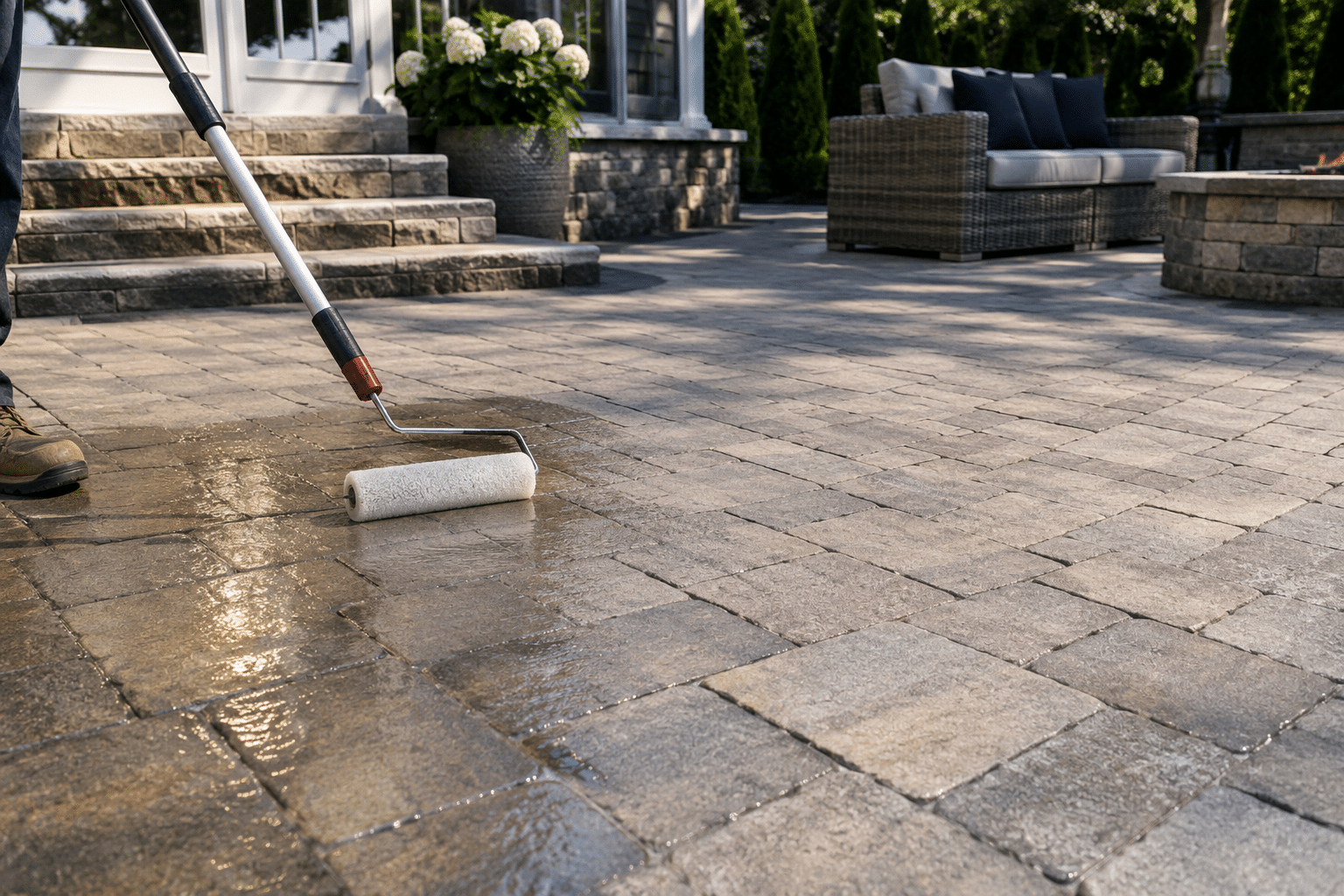
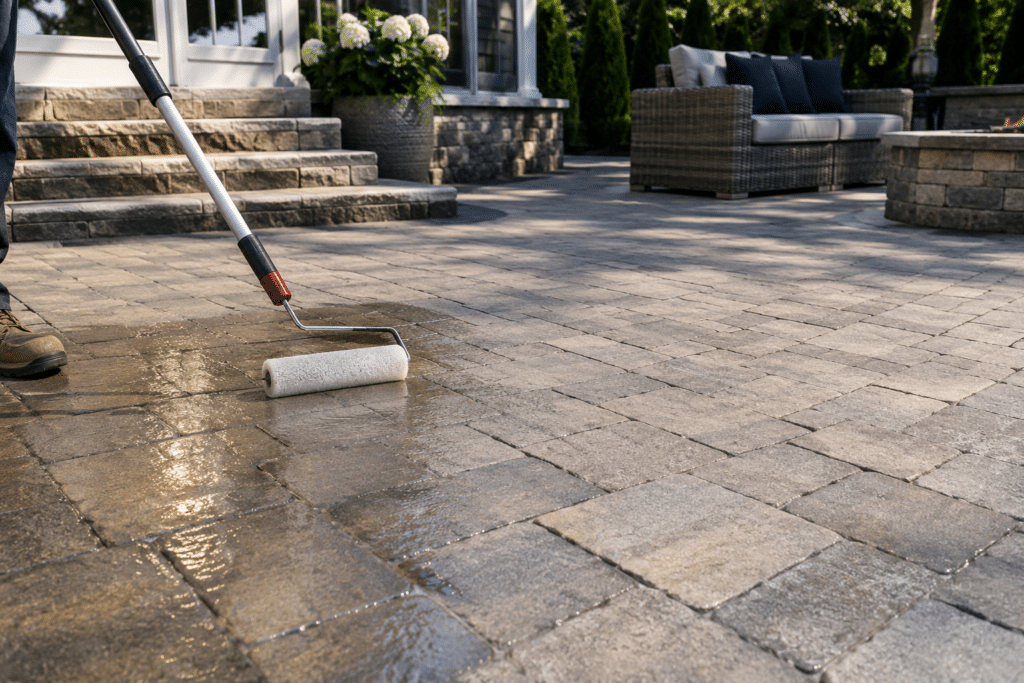
Work in small sections. Spray the sealer on with a pump or low-pressure sprayer, then go over it with a roller to spread it evenly and pick up puddles. Keep a wet edge to avoid lap marks. Some products need only one coat, while others call for two thin coats; if a second coat is needed, wait the full recoat time on the label.
7. Let it cure
Keep people, pets and furniture off until the label’s dry time has passed, and keep cars off longer. Many paver sealers call for about 24 hours before normal use.
Common Paver Sealing Mistakes
- Putting it on too thick. Excess sealer can look plastic, trap moisture and turn cloudy or white.
- Sealing damp pavers. Trapped moisture is a leading cause of white, hazy patches that can show up days later.
- Sealing over efflorescence or stains. Clean first, or you’ll seal them in.
- Sealing in the heat. Hot pavers can make sealer dry too fast, causing streaks and peeling.
- Mixing incompatible sealers. Don’t put water-based sealer over an existing solvent-based coat.
FAQ
How often should pavers be resealed?
Unilock and Nicolock both suggest every three to five years. High-traffic driveways and full-sun areas may need it sooner. When water stops beading or the color looks faded, it’s time.
Can I seal pavers with polymeric sand?
Yes. Let the polymeric sand set (at least 24 hours is commonly recommended), make sure no haze is left on the paver faces, and confirm that your sealer works over polymeric sand.
Will sealing make my pavers slippery?
High-gloss sealers can be slippery when wet. For pool decks and walkways, consider a matte or penetrating sealer, or ask about an anti-slip additive made for your sealer.
Should I roll or spray paver sealer?
Most manufacturers recommend spraying it on and back-rolling to spread it evenly. See our guide to the best sprayer for concrete sealer.
Summary
Sealing pavers is mostly about patience and prep: wait for efflorescence to clear, clean thoroughly, refill the joints, and let everything dry. Then apply a thin, even coat in the right weather and give it time to cure. Choose a penetrating sealer like Siloxa-Tek 8500 for a natural look, or a film-forming acrylic like Cryli-Tek 5505 or DOMINATOR SG+ for a glossy wet look, and plan to reseal every few years.


