
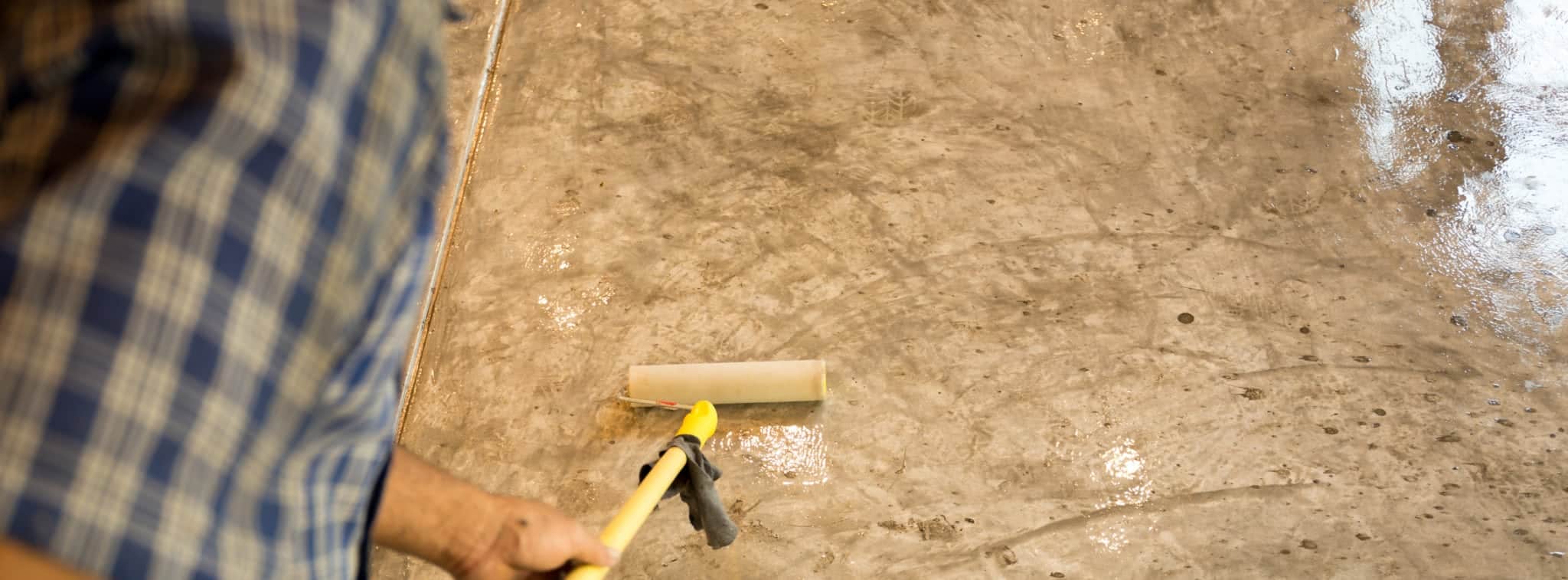
Applying concrete sealer is a manageable DIY job, but results depend almost entirely on preparation and following the manufacturer’s directions. Here’s the process from start to finish.
Tools You’ll Need
- Pump sprayer: fastest for penetrating sealers on large areas. Garden pump-up, backpack or low-pressure airless sprayers all work. See best sprayer for concrete sealer.
- Paint roller: a 1/4″ or 3/8″ nap works for most sealers and is best for acrylics and epoxy coatings.
- Brush: for edges and small areas.
- Cleaning supplies, painter’s tape, and protective gloves and eyewear.
Step-by-Step Application
- Check the weather. Pick a dry day with no rain in the forecast. Most sealers are applied between about 40°F and 90°F; check the label. See best temperature to apply concrete sealer.
- Make sure the concrete is ready. New concrete usually needs to cure first. See how long to wait to seal concrete.
- Clean thoroughly. Remove dirt, oil, grease, mold and efflorescence, and let the surface dry completely. See how to clean concrete before sealing.
- Remove old film-forming sealers if you’re switching to a penetrating sealer, or if the old sealer is peeling. See how to remove concrete sealer.
- Profile the surface for coatings. Epoxy and urethane coatings need a rough profile (typically CSP 2–3) from grinding or acid etching. Neutralize and rinse after etching.
- Apply the first coat evenly, working in manageable sections and avoiding puddles.
- Apply the second coat if the label calls for it. Many penetrating sealers are applied “wet-on-wet” (the second coat goes on before the first dries). Coatings have a specific recoat window.
- Let it dry and cure before foot or vehicle traffic. See how long concrete sealer takes to dry.
Spraying vs. Rolling
Spraying is fastest and works best for thin, penetrating sealers. Rolling gives better control and a more even film for acrylics and epoxies. With either tool, avoid over-applying: excess penetrating sealer can leave a residue, and thick acrylic coats can trap solvent and turn white.
Common Mistakes to Avoid
- Sealing damp concrete or right before rain
- Skipping cleaning or applying over oil stains
- Applying too thick a coat
- Mixing incompatible chemistries (for example, a water-based acrylic over a solvent-based one)
- Missing the recoat window on two-coat systems
How Much Sealer Will You Need?
Coverage varies by product and how porous the concrete is. See how many square feet concrete sealer covers, and check the label’s coverage rate before you buy.
Still choosing a sealer? See our best concrete sealers guide.