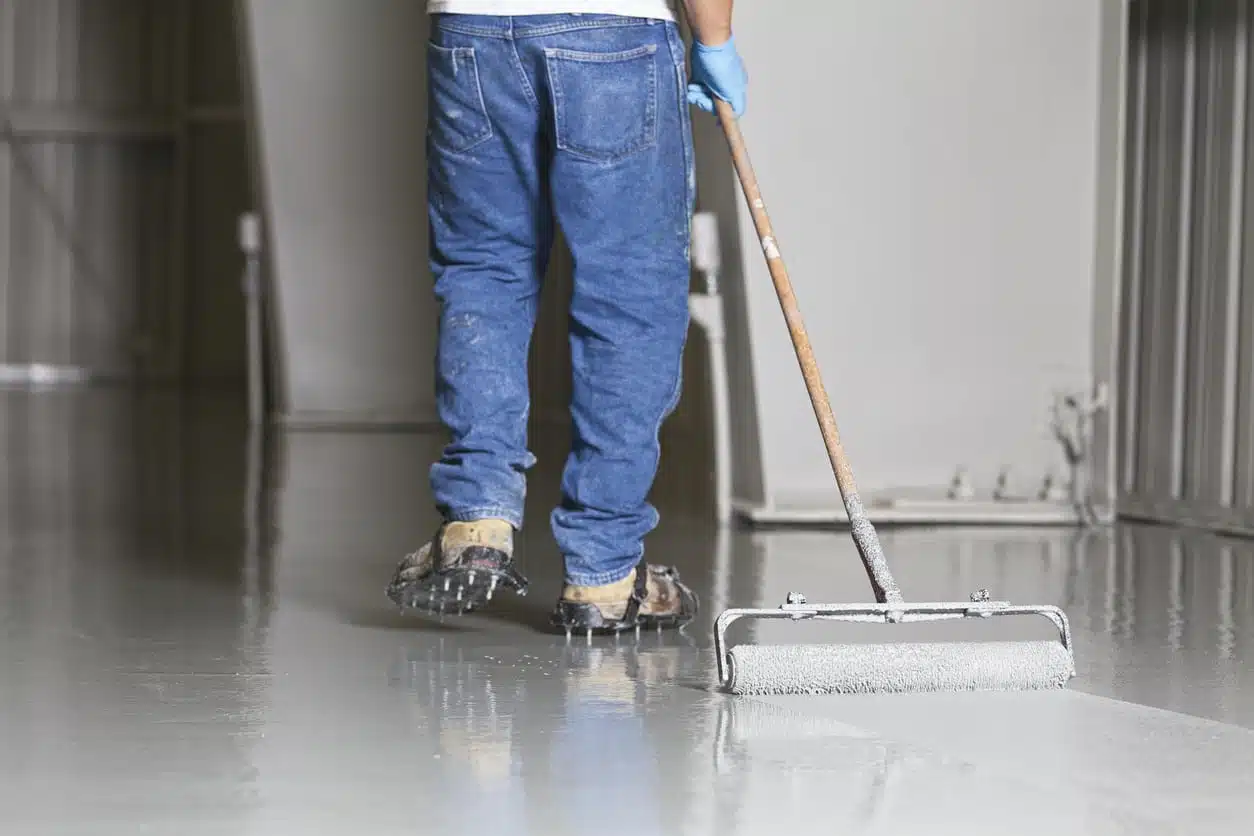
Epoxies, urethanes, and polyaspartics are all very similar types of concrete sealers. They are all surface sealers, meant to be spread evenly over the surface of a concrete slab, protecting it from all sorts of damage without penetrating past the surface. They are all also typically two-component polymers (though there are one-component products out there), meaning they have to be mixed prior to application.
Epoxies, urethanes, and polyaspartics are best suited for high traffic areas, such as the floors of large retail stores, industrial complexes, warehouses, and airports. All of these are examples of buildings whose floors are at a high risk of chemical spillage, abrasion, and other types of potential damage. The three types of sealer are all extremely tough and durable, making them all great choices.
The biggest difference comes with their chemical compositions. Epoxies are a little stronger than urethanes and polyaspartics, making them great basecoats and standalone layers. They bond extremely well to rough concrete surfaces, and they have a wide variety of features making them great for bottom layers. Urethanes can be applied as standalone products, but they are not meant for surfaces that are as rough. Polyaspartics are simply a type of urethane, typically aliphatic urethanes. They provide the same level of protection, but they also have the added bonus of drying incredibly fast. This quality makes them well suited to projects in retail stores or buildings that need to be open and functioning the next day.
All three of the products are strong and similar, but they also all work best as part of an epoxy system. Epoxy systems are simply the combination of one or two epoxy basecoats, followed by a urethane or polyaspartic topcoat, depending on your particular project. You can even add some sort of decorative touch to the project, such as adding sand or paint chips after the epoxy basecoats but before the urethane or polyaspartic topcoat. When applying an epoxy system, you must wait for each layer to dry completely before adding additional layers. If you want the best, strongest, and longest lasting results, you should elect to use an epoxy floor system, as this will ensure your concrete remains visually and structurally sound for years to come.