Affiliate disclosure: Some links on this page are affiliate links. As an Amazon Associate we earn from qualifying purchases, at no extra cost to you.
EUCOSIL from Euclid Chemical is a water-based sodium silicate densifier and dustproofer for interior and exterior concrete floors. It’s a straightforward, low-VOC, ready-to-use product for warehouses, schools, offices and similar floors where you want a harder, less dusty slab without a coating. It works well when applied carefully, but excess material turns into white residue, and it’s not a stain sealer.
| Type | Penetrating densifier / dustproofer (non-film) |
| Chemistry | Water-based sodium silicate |
| Finish | Appearance unchanged once cured; slight water beading |
| Coverage | 150–600 sq. ft. per gallon (about 200 rough, 300 fine texture, 400 hard troweled on new bare concrete) |
| Coats | One; extra coats only on absorbent surfaces |
| Dry/traffic | 4–6 hours to foot traffic or rain; 24 hours to wheel traffic (70°F) |
| VOC | 5 g/L or less |
| Best for | Warehouse, school, office and food storage floors; polished concrete; floors to be tiled |
| Not for | Oil or stain protection; surfaces with sealers or curing compounds |
| New concrete | Cure at least 7 days, remove curing method, air dry 24 hours |
| Packaging | 5-gallon pail, 55-gallon drum, 275-gallon tote |
Watch: EUCOSIL in 60 seconds
What It Is / How It Works
EUCOSIL is a liquid sodium silicate. When it soaks into concrete, it reacts chemically with the cement paste and becomes part of the surface, filling pores with additional hardened material. Euclid says it "seals, densifies, and dustproofs in one operation." The result is a harder floor that sheds less dust, cleans up more easily and slightly beads water.
Because it's not a film, there's nothing to peel or wear off. Euclid notes the concrete darkens right after application and then lightens as it cures and dries, ending up looking the same as before. It's ready to use with no mixing or dilution, odorless, and has a VOC content of 5 g/L or less. Euclid also lists it as Canadian Food Inspection Agency compliant, which helps in food storage areas.
EUCOSIL is still a current Euclid Chemical product, sold through concrete supply houses in pails, drums and totes.
Where It Works Best (and where it doesn't)
Euclid aims it at interior and exterior horizontal concrete: schools, hospitals, offices, apartment buildings, warehouse floors, food storage areas and diamond-polished concrete. It's also a fit for dusting concrete and terrazzo, and for floors that will be tiled later, since Euclid says it can be tiled over.
It's less suited to jobs where you need stain or oil resistance, like a garage floor that sees drips, or a patio that needs strong water repellency. Densifiers harden; they don't block oil. For those, pair it with a sealer or choose one from our best penetrating concrete sealers. For new construction that needs serious abrasion resistance, Euclid itself suggests a dry-shake floor hardener instead.
Pros
- Hardens and dustproofs in one step, with no film to peel
- Ready to use, odorless and very low VOC (5 g/L or less)
- Doesn't change the appearance once cured
- Can be tiled over
- Detailed coverage table for different surface textures
- Two-year shelf life unopened; water cleanup
Cons
- Excess left on the surface forms white residue that may need grinding or sanding
- Needs to be scrubbed in; it's more work than spray-and-walk-away
- No real oil or stain resistance
- Overspray must be washed off glass, metal, wood, paint and brick right away
- Smallest size is a 5-gallon pail
- Curing compounds and sealers must be fully removed first
How to Apply It
- On new concrete, wet cure or sheet cure (or use a removable curing compound) for at least 7 days. Remove the curing method and any laitance, then let the slab air dry at least 24 hours.
- On existing concrete, remove curing compounds, sealers, paint, coatings, dirt, oil and wax. Euclid suggests its EUCO CLEAN & STRIP if needed.
- Protect metal, glass, wood, paint and brick. Have clean water ready to rinse overspray.
- Don't dilute. Apply in a continuous film and scrub it into the surface.
- Brush out puddles and runs immediately. All the product should soak in.
- Add extra coats only on absorbent areas. If later coats stop soaking in, stop and squeegee or vacuum the excess before it dries.
- Keep foot traffic and rain off for 4–6 hours at 70°F and wheel traffic off for 24 hours. Protect the product from freezing in storage.
How It Compares
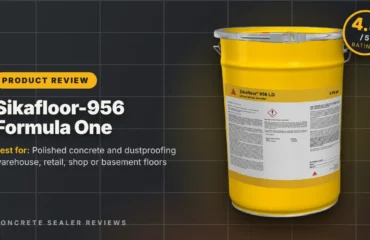
Sikafloor-956 Formula One LD RTU is a lithium silicate densifier. It's walkable and ready to polish in about an hour and is built around polishing work, while EUCOSIL takes 4–6 hours before foot traffic. Both are non-film densifiers that still need a separate sealer for stain protection.
Super-Krete S1300 Pene-Krete is a zero-VOC, spray-only penetrating densifier that's marketed more as a moisture-reducing primer under coatings. It publishes less technical data than EUCOSIL.
Silane/siloxane sealers don't harden the surface, but they give much stronger water and salt repellency on driveways, walks and patios. Many homeowners are better served by one of those, or by a combination of densifier and repellent. See our best concrete sealers for 2026.
FAQ
Is EUCOSIL waterproof?
No. Euclid says it resists water penetration and treated concrete beads water slightly, but it's a densifier, not a waterproofing product. It won't stop water under pressure or seal cracks.
How do I get rid of white residue from EUCOSIL?
Scrub it off immediately while it's still wet. Once dried, Euclid says the residue may need grinding or sanding to remove. The best fix is prevention: work the product in and don't leave puddles.
Can you tile over EUCOSIL?
Yes. Euclid lists tile-over capability as a feature and gives a coverage rate of about 500 sq. ft. per gallon for rough floors that will be tiled.
Can I use EUCOSIL in my garage?
Yes, to harden and dustproof the slab. For oil and tire marks, add a sealer or coating; see our best epoxy floor coatings if you want full protection.
Verdict
EUCOSIL is a well-documented, very low-VOC sodium silicate densifier that does a good job hardening and dustproofing concrete floors. Its weak spots are typical of sodium silicates: you have to scrub it in and manage the excess to avoid white residue, and it provides only light water resistance. For dusty commercial or basement floors, it's a sensible, no-frills choice. Our rating: 3.9/5
How we reviewed this product: this is a research-based review built from the manufacturer's technical data sheet and current retail listings. We have not run our own hands-on tests of this product. Details were checked in October 2026; always follow the current label.