Affiliate disclosure: Some links on this page are affiliate links. As an Amazon Associate we earn from qualifying purchases, at no extra cost to you.
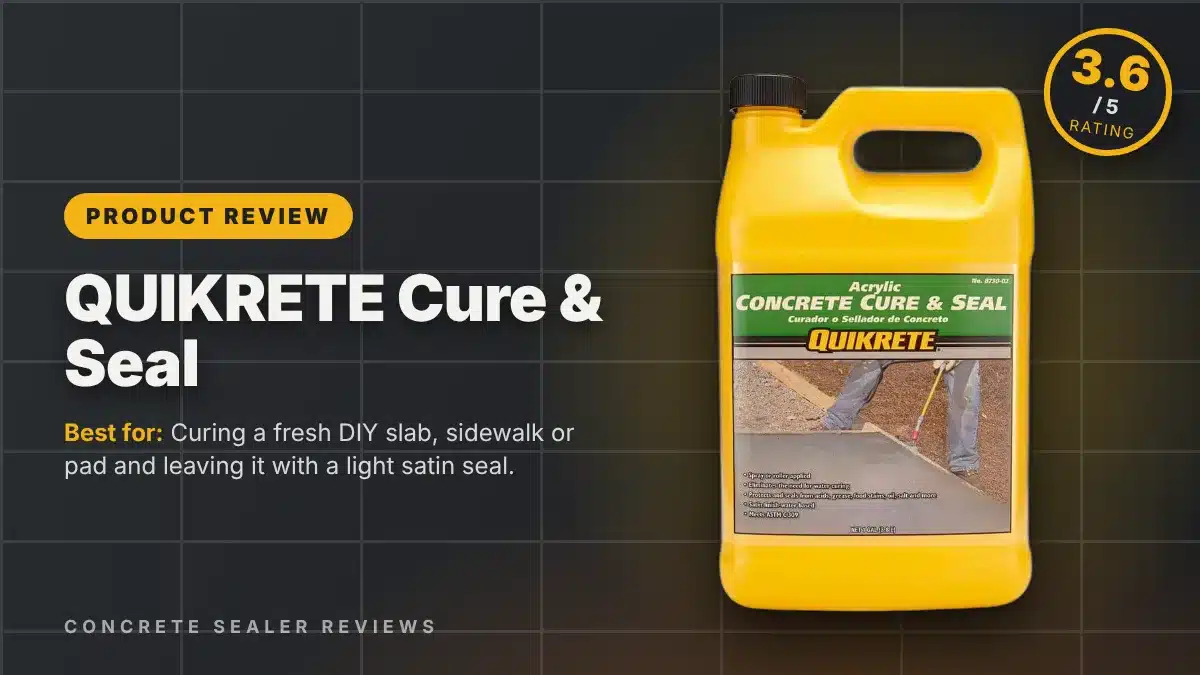
QUIKRETE Acrylic Concrete Cure & Seal (No. 8730) is a water-based clear acrylic that does two jobs. On fresh concrete it works as a curing compound, and on new or existing concrete it seals the surface. It’s widely sold and inexpensive. It works well on DIY pours and for a light satin refresh on driveways, walks and garage floors. With only 20% solids it builds a thin film, and that film needs careful, even application and periodic recoating.
| Type | Membrane-forming curing compound and topical sealer |
| Chemistry | Water-based acrylic copolymer, 20% solids |
| Finish | Clear satin (QUIKRETE also calls it semi-gloss) |
| Coverage | Curing: 200 sq ft/gal. Sealing: 150–200 sq ft/gal depending on texture and porosity. |
| Coats | Curing: two thin coats at right angles. Sealing: an even coat with no puddles. |
| Dry/recoat | Leave the surface uncovered for at least 24 hours after application |
| Cure | No rain, heavy dew or temperatures below 50°F for 24 hours |
| Best for | Curing fresh DIY pours; sealing driveways, sidewalks, garage floors, loading docks |
| Not for | Sealed, painted or non-porous surfaces |
| New concrete | Yes. Meets ASTM C309; apply once the bleed-water sheen is gone. |
Watch: QUIKRETE Cure & Seal in 60 seconds
What It Is / How It Works
QUIKRETE describes 8730 as a "dual purpose water based clear acrylic coating." It's still sold under the same name, in 1-gallon bottles and 5-gallon pails, and some retailers list it as "Commercial Grade." On fresh concrete, the acrylic forms a membrane that slows evaporation so the slab holds its water and cures properly. That can replace wet curing, which helps in hot, dry or windy weather. It meets ASTM C309, the standard for liquid membrane-forming curing compounds, when applied at 200 sq ft per gallon.
On older concrete, the same film works as a sealer. QUIKRETE says it repels water and resists acids, grease and salt. At 20% solids the film is fairly thin, so expect light protection and a modest satin sheen, not the heavy wet look of a high-solids solvent acrylic.
Where It Works Best (and where it doesn't)
It's at its best on a fresh DIY slab, sidewalk or pad, where one product cures the concrete and leaves a sealed, clean-looking finish. It's also a reasonable low-cost refresh for clean, porous driveways, walkways and garage floors.
It doesn't belong on concrete that's already sealed or painted, or on dense surfaces that won't absorb it. QUIKRETE specifically excludes non-porous, sealed and painted surfaces. Colored concrete is tricky because uneven application shows up as uneven color. If your main goal is protecting a driveway from deicing salt and freeze-thaw damage, a penetrating repellent is usually the better tool. See our best driveway sealers.
Pros
- Cures and seals in one product; meets ASTM C309
- Water-based, cleans up with water
- Easy to find and inexpensive per square foot
- Goes on with a garden sprayer, roller, brush or broom
- Owners commonly report easy application and an even, clean finish
Cons
- Low 20% solids means a thin film with modest durability
- Over-applying or puddling causes appearance problems
- Some owners report milky, blotchy or frothy patches, including whitening when the sealer gets wet
- Can't go over sealed, painted or non-porous surfaces
- Pine and citrus cleaners can discolor the finish
- The data sheet doesn't give a dry or recoat time for sealing
How to Apply It
- Check the weather. Don't apply if rain, heavy dew or temperatures below 50°F are expected within 24 hours. Keep the product from freezing in storage.
- For fresh concrete: Apply after finishing, once the surface sheen is gone and bleed water has soaked back in. That's typically 4–6 hours after placing, 2–3 hours in hot, windy weather and at least 10–12 hours in cool weather.
- Curing coats: Spray two thin coats at right angles with a garden sprayer, at about 200 sq ft per gallon. Brush out any puddles.
- For existing concrete: Remove oil, dirt and contaminants. For heavy soiling, QUIKRETE suggests its Concrete & Asphalt Cleaner or Oil Stain Remover, then a rinse. Repair or remove flaking concrete, and make sure the surface is dry and porous.
- Sealing coat: Apply with a broom, brush, roller or garden sprayer at 150–200 sq ft per gallon. Don't exceed that coverage rate or leave puddles, and keep the coat even, especially on colored concrete.
- Protect it. Leave the surface uncovered for at least 24 hours. Clean sprayer nozzles and tools with water right away.
How It Compares
Eagle Satin Seal is a similar water-based satin acrylic aimed at broom-finished concrete. Eagle publishes coverage by surface type and foot-traffic times, but it doesn't claim ASTM C309 curing performance. QUIKRETE is the more practical choice on fresh pours.
Solvent-based acrylics, such as Eagle Supreme Seal, give a richer wet look and higher build, but they have strong odor and much higher VOC. On a garage forum thread about QUIKRETE sealer whitening in the rain, one contractor said they had moved away from water-based acrylics for that reason.
Penetrating silane/siloxane sealers leave no film to wear off or whiten, which makes them a better long-term choice for exterior flatwork once the slab has cured. See our best penetrating sealers.
FAQ
Can you use QUIKRETE Cure & Seal on new concrete?
Yes, that's one of its main jobs. Apply it once the surface sheen is gone, typically 4–6 hours after placing, in two thin coats at 200 sq ft per gallon.
Why did my Cure & Seal turn white?
Whitening usually means the film didn't form properly. Common causes are applying too heavily, puddling, moisture in the slab, or rain or dew before it dried. QUIKRETE warns against exceeding the coverage rate and against applying with rain or dew expected within 24 hours. If the problem keeps coming back, contact QUIKRETE before you add more coats.
Is QUIKRETE Acrylic Cure & Seal waterproof?
It repels surface water, but it isn't a waterproofing membrane and isn't rated for hydrostatic pressure. For damp basement walls, look at a dedicated masonry waterproofer. See our waterproofing sealer guide.
Can you put it over an old sealer?
QUIKRETE says the surface must be porous and able to accept more sealer, and it shouldn't go on sealed or painted surfaces. If water beads on the slab, the old sealer is still there.
Verdict
QUIKRETE Acrylic Concrete Cure & Seal is a handy, low-cost product for curing a fresh DIY pour and leaving it with a light satin seal. On older concrete it's an acceptable budget sealer, as long as you apply it thin and even, in good weather. The low-solids film doesn't last long, and owners report occasional whitening, so it's not the top pick for long-term driveway protection. See QUIKRETE's product page for current details. Our rating: 3.6/5
How we reviewed this product: this is a research-based review built from the manufacturer's technical data sheet and current retail listings. We have not run our own hands-on tests of this product. Details were checked in October 2026; always follow the current label.