
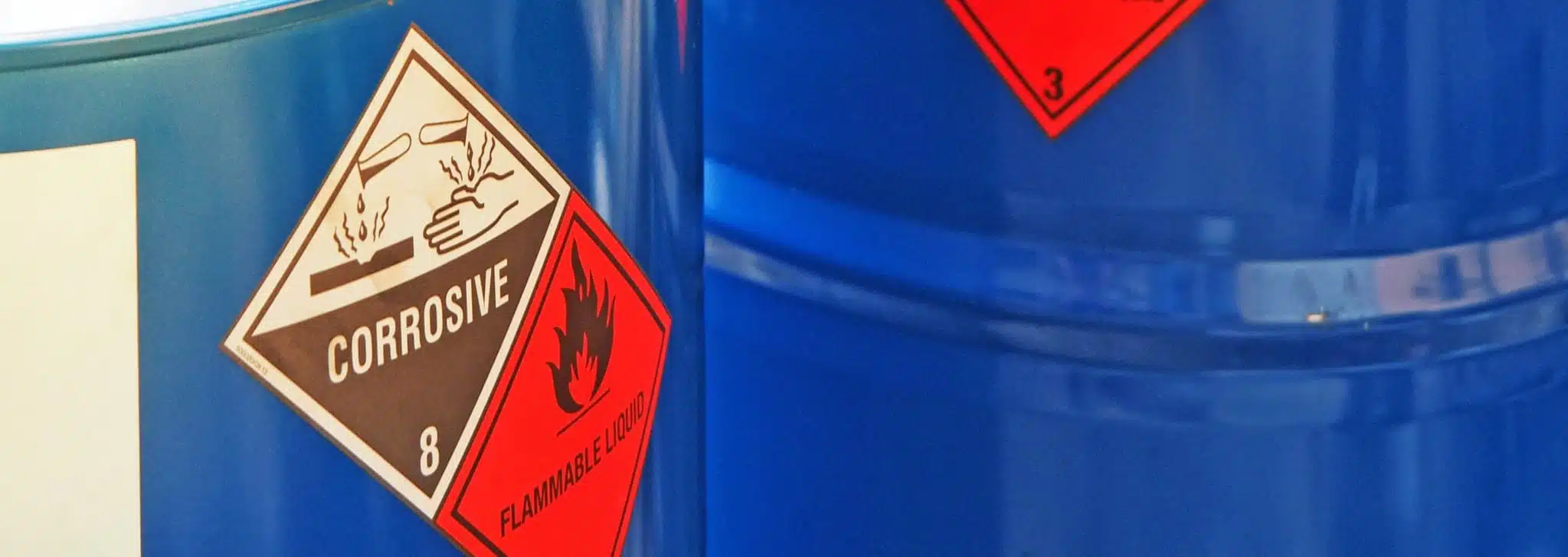
Q: Is concrete sealer toxic?
A: Concrete sealers are available in three different forms: water based, solvent based and 100% actives/100% solids. The toxicity of a concrete sealer will depend on its chemical components. Generally speaking solvent based concrete sealers are going to be more toxic than water based concrete sealers. By viewing the SDS (Safety Data Sheet) you can view the hazardous statements and the precautionary statements associated with the product. Concrete sealers also contain volatile organic compounds (VOCs) which are emitted from liquid chemicals. Water based concrete sealers contain less VOC’s than solvent based sealers. VOC’s can be dangerous, have strong odors and result in adverse health effects.
That being said, solvent based concrete sealers tend to outperform and outlast water based concrete sealers. Water and solvents are used in concrete sealers to carry the active ingredients into the substrate and solvents are able to penetrate deeper and bond better. Solvent based concrete sealers can be more expensive than water based products. Now a days VOC regulations are set on a state level. Certain states are more strict with the amount of VOC’s allowed in a product for retail sale. For example certain areas of California have a VOC limit of 100 g/L. This makes it hard when shopping for a concrete sealer since manufacturers will not sell certain products to certain states. There are however, certain exempts solvents which are still allowed despite their VOC content.
Related Guides

Q: How Much Does it Cost to Seal a Concrete Driveway?
A: The cost of sealing a concrete driveway is going to depend on whether you are looking to hire a contractor to do the sealing or if you are looking to do the sealing yourself. Most concrete sealers these days are extremely DIY friendly. VOC regulations (volatile organic compounds, or how smelly a product will be) are relatively low and concrete sealers do not usually require a respirator or special equipment.
If you decide the task is too much of an undertaking and you hire a contractor the cost is going to be significantly more. You are not only paying the product cost but you are also paying for the concrete surface preparation, product application and cleanup. Most contractors usually charge about $1 a square foot to do the actual sealing. If the concrete does not need any surface preparation the job can usually be done in one day.
The product cost is going to vary based on the type of concrete sealer that is used. If you are using a decorative concrete sealer like an acrylic or urethane the product cost can vary anywhere from $0.25- $0.50 a square foot. If you are using a penetrating concrete sealer the cost ranges anywhere from $0.20 to $0.75 a square foot.
So how much does it cost to seal a concrete driveway? If you hire a contractor the cost is about $1.20 -$1.75 a square foot. If you decide to seal the concrete yourself the cost is about $0.20-$0.75 a square foot. If you decide to use an acrylic concrete sealer or a decorative sealer that will give a gloss or wet look finish, keep in mind that these products need to be reapplied every few years. If you decide to use a penetrating concrete sealer they only need to be reapplied every 5-10 years.
If you decide to embark on the sealing process read our How to Seal Concrete article which goes over the step by step application process.
Related Guides

Applying concrete sealer is a manageable DIY job, but results depend almost entirely on preparation and following the manufacturer’s directions. Here’s the process from start to finish.
Tools You’ll Need
- Pump sprayer: fastest for penetrating sealers on large areas. Garden pump-up, backpack or low-pressure airless sprayers all work. See best sprayer for concrete sealer.
- Paint roller: a 1/4″ or 3/8″ nap works for most sealers and is best for acrylics and epoxy coatings.
- Brush: for edges and small areas.
- Cleaning supplies, painter’s tape, and protective gloves and eyewear.
Step-by-Step Application
- Check the weather. Pick a dry day with no rain in the forecast. Most sealers are applied between about 40°F and 90°F; check the label. See best temperature to apply concrete sealer.
- Make sure the concrete is ready. New concrete usually needs to cure first. See how long to wait to seal concrete.
- Clean thoroughly. Remove dirt, oil, grease, mold and efflorescence, and let the surface dry completely. See how to clean concrete before sealing.
- Remove old film-forming sealers if you’re switching to a penetrating sealer, or if the old sealer is peeling. See how to remove concrete sealer.
- Profile the surface for coatings. Epoxy and urethane coatings need a rough profile (typically CSP 2–3) from grinding or acid etching. Neutralize and rinse after etching.
- Apply the first coat evenly, working in manageable sections and avoiding puddles.
- Apply the second coat if the label calls for it. Many penetrating sealers are applied “wet-on-wet” (the second coat goes on before the first dries). Coatings have a specific recoat window.
- Let it dry and cure before foot or vehicle traffic. See how long concrete sealer takes to dry.
Spraying vs. Rolling
Spraying is fastest and works best for thin, penetrating sealers. Rolling gives better control and a more even film for acrylics and epoxies. With either tool, avoid over-applying: excess penetrating sealer can leave a residue, and thick acrylic coats can trap solvent and turn white.
Common Mistakes to Avoid
- Sealing damp concrete or right before rain
- Skipping cleaning or applying over oil stains
- Applying too thick a coat
- Mixing incompatible chemistries (for example, a water-based acrylic over a solvent-based one)
- Missing the recoat window on two-coat systems
How Much Sealer Will You Need?
Coverage varies by product and how porous the concrete is. See how many square feet concrete sealer covers, and check the label’s coverage rate before you buy.
Still choosing a sealer? See our best concrete sealers guide.
Related Guides

Q: How Long Does Concrete Sealer Take to Dry?
A: Once you apply a concrete sealer the dry time is going to depend on a number of factors including the temperature, humidity, dew point, and the type of concrete sealer or concrete coating that was applied.
Generally speaking epoxy floor coatings and durable urethane coatings take the longest to dry. A full cure can range anywhere from 1-7 days. A full cure is the time it takes for a concrete coating to fully dry to the point where the coating can handle vehicle and forklift traffic. Other cure times include light foot traffic which is usually 24 hours after the concrete coating has been applied, and the re-coat time which is the window to re-coat an epoxy floor coating or a urethane coating without having to de-gloss it. If you wait too long to apply a urethane top coat after applying an epoxy base coat you will need to lightly sand the top of it before applying the top coating in order to get good adhesion.
Decorative concrete sealers have the shortest dry time of 1-6 hours since the are topical. Solvent based acrylic concrete sealers are usually dry to the touch in 1-3 hours depending on the time of application and the relative humidity. Water based acrylic concrete sealers are usually dry to the touch in 3-6 hours depending on the time of application and the relative humidity.
Penetrating concrete sealers take longer to dry than decorative concrete sealers because they penetrate deep into the concrete and dry from the inside out. Depending on the temperature at the time of application and the relative humidity this can be anywhere from 2-8 hours. Penetrating concrete sealers usually require two coats of sealer applied wet-on-wet. What this means is the second coat is applied on top of the first coat while the first coat is still wet. You do not want to apply a second coat after the first coat has dried or the first coat will try to repel the second coat. The second wet-on-wet coat is applied anywhere from 1-15 minutes after the first coat is applied.
If you are looking for product specific recommendations check out our best concrete sealers article.
Related Guides

Short answer: most outdoor concrete should be sealed, and many indoor slabs benefit too. Concrete is porous. Unsealed, it soaks up water, deicing salts, oil and other contaminants, and that is what leads to spalling, pitting, cracking, staining and mold. Sealing costs a small fraction of what it costs to replace a slab, and a good penetrating sealer can protect concrete for years between applications.
What Sealing Protects Against
- Freeze-thaw damage: water that soaks into concrete expands when it freezes, breaking the surface apart over time.
- Deicing salts: salt and chlorides, including salt tracked in on your car, accelerate spalling and corrode reinforcing steel.
- Stains: oil, grease, leaves and rust soak into unsealed concrete and are hard to remove.
- Moisture and mold: in basements and shaded areas, a water-repellent sealer helps limit dampness, mildew, moss and efflorescence.
- Dusting and wear: densifiers harden the surface so garage and basement floors shed less dust.
Which Concrete Should Be Sealed?
Sealers can be used on driveways, patios, walkways, pool decks, garage floors, basements, stamped concrete, exposed aggregate, pavers, brick and stone. Sealing matters most for:
- Driveways and walkways in cold climates that see snow, ice and road salt
- Garage floors exposed to oil, fluids and tire traffic
- Basement floors and walls with dampness or efflorescence
- Stamped and colored concrete, where a sealer protects and enhances the color
When Sealing Isn’t Worth It
Sealing has limits. It won’t fix structural cracks, settling or drainage problems; fix those first. Brand-new concrete usually needs to cure before most sealers go on (see how long to wait to seal new concrete). And concrete that’s fully covered by flooring indoors usually needs moisture testing more than a sealer.
Which Type of Sealer to Use
- Penetrating sealers (silanes, siloxanes, silicates) soak in, leave a natural look and last the longest outdoors. See best penetrating concrete sealers.
- Acrylic sealers add gloss or a “wet look” and enhance color, but wear faster outdoors. See best acrylic concrete sealers.
- Epoxy, urethane and polyaspartic coatings build a hard, chemical-resistant film for garages, shops and warehouses. See best epoxy floor coatings.
Frequently Asked Questions
What happens if you don’t seal concrete?
It will still last, but it absorbs water, salt and stains. In cold climates, unsealed driveways often show surface scaling and pitting after a few winters.
How often should concrete be sealed?
It depends on the sealer. Penetrating sealers typically last five years or more; acrylics often need reapplying every one to three years outdoors. See how long concrete sealers last.
Is sealing concrete worth the cost?
Usually, yes. Sealing a driveway costs a small fraction of replacing it. See how much it costs to seal a concrete driveway.
Ready to choose a product? Start with our best concrete sealers guide.
