
Concrete Sealer Reviews

  • Home
  • Best Concrete Sealers
  • Product Reviews
  • About Us
Mark Dominic writes Concrete Sealer Reviews. He covers penetrating sealers, coatings and surface protection for driveways, garages, basements and patios, with a focus on how products hold up through freeze-thaw cycles and deicing salts.
epoxy floor paint
  • 0
  • 58
Mark Dominic
Monday, 23 December 2013 / Published in COATINGS, COMMERCIAL FLOOR COATINGS

Commercial Floor Coatings

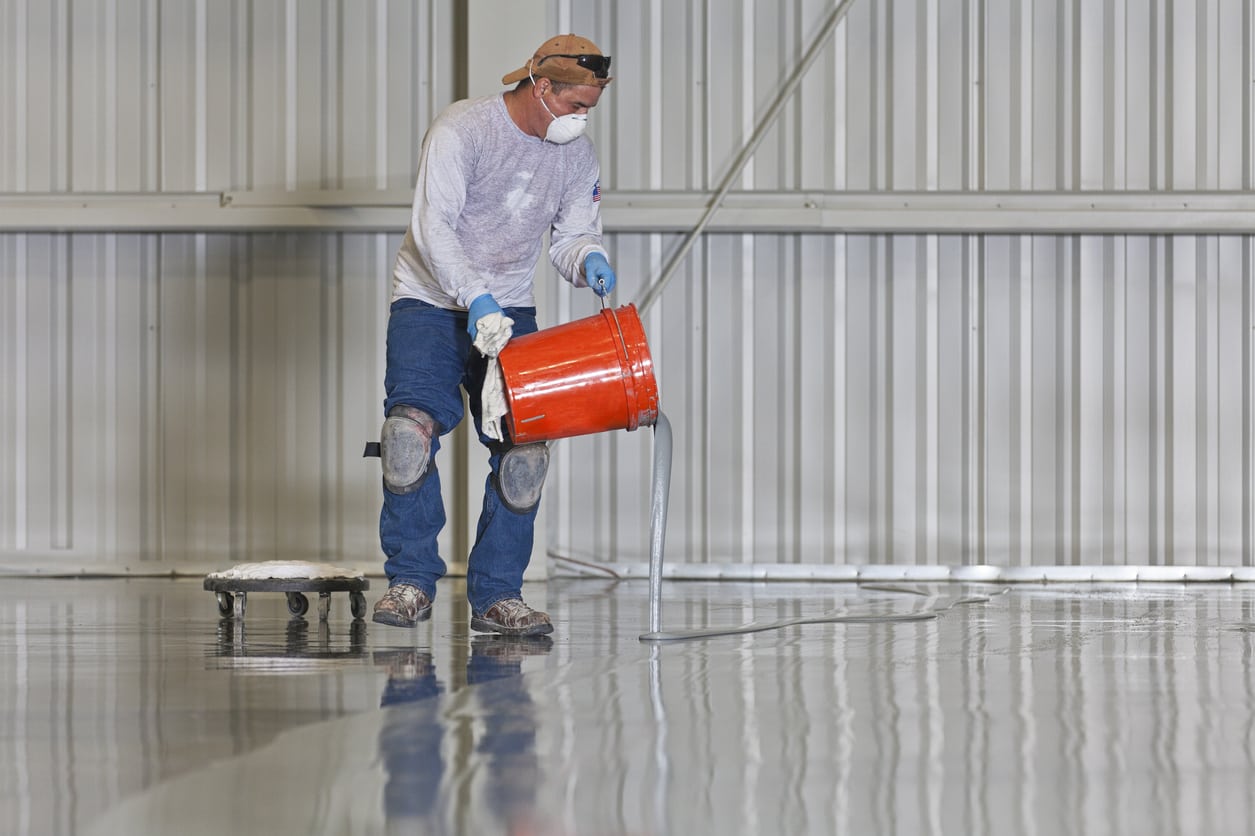
Have you ever wondered how the concrete floors that make up most large commercial buildings, retail or otherwise, remain so clean? They rarely exhibit signs of water or chemical spillage, as well as cracking or similar such things that mar the visual appeal. These floors are solid, clean, smooth, and never show the degradation that can affect your own concrete in your home or building. The secret to the protection is not even really a secret. Concrete sealers are what give the concrete floors of commercial buildings their long-lasting strength and visually unblemished surfaces.  With the incredible amount of traffic from feet, machinery, products, and pallets, the concrete floors would soon deteriorate under normal circumstances had they not been protected with a concrete sealer. The best concrete sealer for large commercial floors would be an aliphatic urethane. Aliphatic urethanes are a type of topical concrete sealer whose large particles of sealant preclude the concrete sealing solution from passing into the concrete. Instead, the aliphatic urethane particles will puddle on the surface of the concrete to be spread out evenly during the application process if you are using a broom. If you elect to use a light pump sprayer, the application is even easier, though the result will be the same. Aliphatic urethanes are concrete sealants that feature remarkable levels of protection against the most extreme conditions concrete could be subjected to. They offer excellent resistance to heat, UV radiation, water damage, chemical spills, abrasions, discoloration, and other such potential threats to the structural and visual integrity of the concrete. For it is true that the visual appeal of a commercial building’s floors is just as important as the structural integrity of said floors – shoppers do not want to be wandering around buildings whose floors are cracked, stained, and dingy. Aliphatic urethanes are the best solution for the floors of a commercial building. And, if you have a project that needs to be completed overnight, before business begins the next day, you need to choose a polyaspartic concrete sealer. Polyaspartics are the wonder materials of the concrete sealing industry, featuring all of the same benefits of aliphatic urethanes with the added bonus of an exceptionally fast dry time – simply apply the polyaspartic at night and it will have completely dried and bonded to the concrete floor by the morning. Whichever product you opt for, you will be satisfied with the results. Our Take: Excellent Aliphatic Urethanes: Sherwin William’s Corothane, Urethane 645 and ArmourShield XP Excellent Polyaspartics: Flexmar’s Polyaspartic, Rhino Pro Flooring’s Polyaspartic,  and HP Spartacote’s Polyaspartic

Related Guides

  • Best Epoxy Floor Coatings
  • Epoxy System vs. Densifier in a Garage
  • Ghostshield Epoxy Max 100 Review
  • RockSolid Polycuramine Garage Floor Coating Kit Review
  • Best Concrete Sealers for 2026
iStock 479040122
  • 0
  • 42
Mark Dominic
Friday, 20 December 2013 / Published in BEST CONCRETE SEALERS, TOP DENSIFIER FOR POLISHED CONCRETE, TOP DENSIFIER FOR POLISHED CONCRETE

Top Densifier for Polished Concrete

Polished concrete is one of the newer choices many people make for their concrete surfaces. Concrete naturally is a very porous material made from the mixing of water, Portland cement, and some sort of aggregate, such as stones, gravel, or sand. The mixture, when properly completed, results in the formation of concrete that features a large amount of tiny pores and hairline cracks that extend, web-like, throughout the concrete. While these pores and cracks do not overly inhibit the concrete’s strength, they can be the cause of future damage.

To make sure your concrete is as strong as it possibly can be, as well as protected from potential future harm, you need to make sure you seal your concrete with the appropriate concrete sealer. However, the situation changes slightly if you decide to polish your concrete. Polishing concrete is a choice many people make because it grinds down the surface of the concrete to transform the pockmarked natural surface into a smooth, shiny expanse of concrete. These types of floors are typically found in large retail stores, such as Home Depot, as well as a number of other venues.

While the polishing process is as simple as renting a concrete grinder and following the instructions from there on, there is a crucial step that many people skip. Skipping this step, of course, can result in absolute disaster for the concrete, leading to excessive cracking, crumbling, and general degradation that can necessitate costly repairs.

Before you can polish concrete, you need to increase the strength and density of the slab. Polishing pushes the concrete’s structural integrity to the brink, which can be problematic for untreated concrete. In order to ensure a successful concrete polishing process, you need to treat the concrete slab with a concrete densifier. The best choice for this project would be a lithium silicate/siliconate. These types of sealer are the strongest densifiers on the market, featuring deep penetration and comprehensive chemical reactions that create more calcium silicate hydrate (or CSH) that gives concrete its noted strength. Once the lithium silicate sealer has been properly applied, the concrete can be polished without fear of damage caused by untreated concrete.
Related Guides

  • Best Penetrating Concrete Sealers
  • Silicate vs. Silane/Siloxane Sealers
  • Best Penetrating Cure and Seals
  • Best Concrete Cure and Seal
  • Best Concrete Sealers for 2026
stamped concrete sealer
  • 0
  • 34
Mark Dominic
Thursday, 19 December 2013 / Published in INFORMATION, WHAT TO LOOK FOR WHEN BUYING CONCRETE DYE

What to Look for When Buying Concrete Dye

Concrete is naturally gray, which is fine for many of the places where you find concrete. From garages to basements to foundations to driveways to patio decks, and so on and so forth, concrete’s gray drabness is not typically a problem. However, you do not have to remain complacently settling for gray slabs, as there are options to impart color to your concrete slab. Acid stains are probably the most traditional method of coloring concrete, as these products alter the concrete slab on a fundamental level by reacting chemically – however, their main drawback is that acid stains only come in a few different types of colors. A much better option that is appearing more and more in the concrete sealing and coloring market is the concrete dye. Concrete dyes are remarkably variable, featuring such colors as blue, red, and yellow, which can all be mixed with each other to evoke other colors (a near infinite amount) from the concrete slab. If you happen to find yourself wanting an orange concrete slab, simply mix together yellow and red (and so on and so forth). Concrete dyes are an incredibly flexible and inexpensive way to color your concrete – its not surprise concrete dyes are exploding in popularity. If we turn to the dyes themselves, they are clear solutions with tiny particles of chemical that seep past the tiny surface pores of the concrete to within the material. While they offer excellent penetrative depth and coloration, they will not cover up and hide unwanted stains or markings that are already found within the concrete. Despite this, they are an excellent choice for a relatively clean and unmarked slab of concrete. Of course, you can always still apply the concrete dye to a marred slab of concrete – just don’t expect the markings to disappear or be covered up by the concrete dye. They are extremely straightforward and easy to apply, and they require very little clean up. They are, in short, the best option for coloring concrete.

Related Guides

  • Best Acrylic Concrete Sealers
  • How to Color Concrete
  • Valspar Solid Color Concrete Stain Review
  • What Kind of Paint Do You Use on Concrete
  • Best Concrete Sealers for 2026
basment moisture mitigation
  • 0
  • 20
Mark Dominic
Tuesday, 17 December 2013 / Published in BASEMENT WATERPROOFING EXPLAINED, BASEMENT WATERPROOFING EXPLAINED, BASEMENTS

Basement Waterproofing Explained

As the areas of our homes that are probably the most vulnerable to damage, basements require a little more care and consideration than many other parts of our houses. Water damage typically will not plague a home, even on the ground floor. However, since basements are actually located underground, they are at a higher risk of damage from the elements, especially water damage. Water damage typically occurs from flooding. While flooding can be a surprise, such as from flash floods or natural disasters like hurricanes, the flooding that can regularly plague basements generally builds up over time. Areas near rivers, lakes, oceans, and other bodies of water have high water tables. This just means there is a large amount of water pooled beneath the surface of the ground. When the water table is high, there is a greater chance of flooding because water from rain cannot sink into the earth to as great of an extent as in places with a low water table. Basements in areas with high hydrostatic pressure, which is when the water table is high, are prone to water damage. While concrete seems strong and impervious to water flowing through it, it is actually a porous material. Its mixing process results in a large number of tiny air pockets that allow water and moisture to pass through the material. While trace amounts of moisture are not a problem, water can physically pass through the concrete and drip through the walls, leading to mold and mildew build-up, as well as damaging your home and possessions. The best way to prevent this type of damage is by using a concrete sealer. If you use an acrylic sealer, the water will just seep through and push the sealer off the surface from within the material. The acrylic sealer will bubble and flake and water will still drip into your basement. The better choice is a penetrating sealer. These sealers will penetrate past the surface of the concrete to react chemically within the material. The chemical reaction not only increases the concrete’s density and strength, but it also fills in the pores and hairline cracks that allow the uninhibited passage of moisture into the concrete. Without a free network offering passage throughout the concrete, the water will have nowhere to go, backed up outside of the surface and barred from entrance. Only then will your concrete’s safety be improved and protection achieved.

Related Guides

  • Best Waterproofing Concrete Sealer (2026)
  • Best Concrete Sealer for Basement Waterproofing
  • The Truth about Concrete Waterproofing
  • Best Water Repellent Concrete Sealers
  • Best Concrete Sealers for 2026
  • DRYLOK Extreme Masonry Waterproofer Review
concrete sealer
  • 0
  • 38
Mark Dominic
Monday, 16 December 2013 / Published in COMPARISONS, CONCRETE SEALER COMPARISONS

Concrete Sealer Comparisons

When searching for a concrete sealer online, you can often be overwhelmed by the sheer amount of possible choices available to you. To make matters worse, companies, manufacturers, and distributors often do not explain which situations and types of concrete their sealers are appropriate for. For instance, if you do not do enough independent research, you could easily purchase an acrylic sealer without realizing that it is the wrong choice for a concrete basement floor – the manufacturer and/or the distributor will not give you this information, instead marketing their product in general terms designed to encourage the consumer to purchase their product. There are two main varieties of concrete sealer types. The first are the penetrating sealers. These tend to be sodium silicates, lithium silicates, or lithium silicate/siliconates that are designed to penetrate past the surface pores natural to all concrete. Their small particles of sealant can seep through the microscopic holes dotting the surface of the concrete, which allows the sealant to enter the vast network of hairline cracks and microscopic pores that extend throughout the concrete. Once inside the concrete, these sealant particles react chemically with minerals already present in the slab, leading to the creation of more calcium silicate hydrate (or CSH), which is the naturally occurring mineral in concrete that gives it its strength. Because these types of sealers increase the concrete’s strength for life, they are often referred to as concrete densifiers – not only do they densify, they also block the passage of water, salts, and other potential harms through the concrete. The other broad category of concrete sealer is the surface sealer. These topical level sealers contain large particles of sealant that cannot fit past the surface pores of the concrete. Instead, the solutions pool on the surface of the concrete to be spread out evenly during application. These products range from acrylic sealers to epoxies, urethanes, and polyaspartics, all of which are extremely different. However, they all bond to the surface of the concrete to lock out water and minerals from entering the material, much like a raincoat locks out water while you’re wearing it. For a more in-depth discussion about the various products mentioned here, please refer to other our other articles that we constantly update and add to for your convenience.

Related Guides

  • Best Concrete Sealers for 2026
  • Does Concrete Need to Be Sealed?
  • Are Expensive Brands Really Worth It?
  • Concrete Sealer Testing
waterproofing concrete ealer
  • 0
  • 44
Mark Dominic
Friday, 13 December 2013 / Published in DOES A WATER REPELLENT REPEL WATER, DOES A WATER REPELLENT REPEL WATER, Q&A

Does a Water Repellent Truly Repel Water?

With the excessive number of companies manufacturing and distributing concrete sealers continuing to grow, it is important to eradicate some of the more pervasive myths. Most of these myths have to do with the concrete sealers and their propensity to repel or completely protect against water. Waterproofing concrete sealers are hard to find – typically the only types of sealers that can truly waterproof are lithium silicate/siliconate products that are not exactly everywhere on the market as they are more expensive to produce. Most companies simply content themselves to label their lesser (and less expensive to produce) products as waterproofers, when they will offer only a level of water resistance at best. We now turn to examine the concrete sealers that claim to repel water. Water repellents are everywhere on the market, and many readers have been contacting me to ask whether or not products that claim to be water repellents actually are. In other words, does a water repellent truly repel water? The answer is yes, they do. While there are many products that are developed and sold by unscrupulous companies who simply want to make money by offering a worse product for less money, there are a umber of companies that produce quality water repellent products. The key to see if your product is water repellent can, unfortunately, only happen after you have purchased and applied your concrete sealer. If you apply the sealer and any water that drips onto the surface of the concrete after the application and drying process has properly completed beads and drips off the concrete, then the product you used is indeed a water repellent sealers. Water repellent sealers can be acrylics, but they are most often silane/siloxanes. Nearly all silane/siloxanes are water repellent, and they should be more or less bought with confidence. These products work by creating a hydrophobic barrier that locks out water with the particles of silane (that penetrate) and the particles of siloxane (that remain on the surface). This process creates the hydrophobic barrier that does not allow water to penetrate into the concrete, nor does it allow the water to even sit on the concrete surface, resulting in the beading and dripping off. Of course, water repellents are not waterproofers, and water will eventually seep into the concrete in minute amounts with the presence of enough water. However, as long as there is not standing water for a significant period of time, silane/siloxanes will offer comprehensive water repellent protection for your concrete surfaces.

Related Guides

  • Best Concrete Sealers for 2026
  • What is a Solvent Based Concrete Sealer
  • Best Waterproofing Concrete Sealer (2026)
  • Best Water Repellent Concrete Sealers
  • Can a Densifier Really Waterproof Concrete?
  • Top Radon Reducing Concrete Sealers
  • 8
  • 9
  • 10
  • 11
  • 12

Search

Interesting Posts

  • Rust-Oleum OKON S-40 Water Repellent Sealer Review

    Affiliate disclosure: Some links on this page a...
  • KILZ 1-Part Epoxy Concrete & Garage Floor Paint Review

    Affiliate disclosure: Some links on this page a...
  • Rainguard Micro-Seal Penetrating Water Repellent Review

    Affiliate disclosure: Some links on this page a...
  • Valspar Concrete & Masonry Waterproofer Review

    Affiliate disclosure: Some links on this page a...
  • BEHR Premium Wet-Look Sealer (No. 985) Review

    Affiliate disclosure: Some links on this page a...

ABOUT US

ABOUT US

Concrete Sealer Reviews helps homeowners and contractors choose the right sealer, waterproofer or coating for driveways, garages, basements and patios. Articles are written by Mark Dominic. We earn affiliate commissions on some purchases, and some brands featured here have a business relationship with this site.

Subscribe to our newsletter to receive the latest news and articles!

Be the latest to read new product reviews!

  • Home
  • Best Concrete Sealers
  • Product Reviews
  • About Us

© 2026. All rights reserved. Concrete Sealer Reviews

TOP