
Affiliate disclosure: Some links on this page are affiliate links. As an Amazon Associate we earn from qualifying purchases, at no extra cost to you.
Need to waterproof a damp basement wall? No. 980 is a clear water repellent for above-grade concrete and masonry. For BEHR’s paint-like basement wall coating, see our BEHR DryPlus Masonry Waterproofer (No. 875) review.
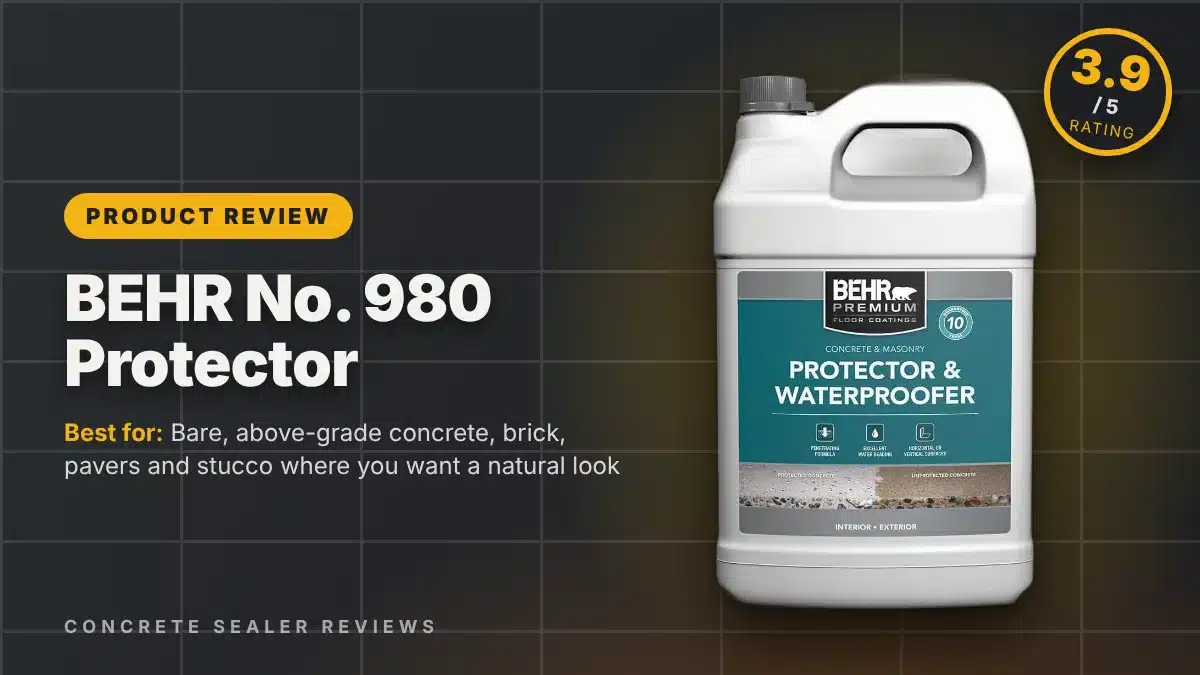
BEHR PREMIUM Concrete & Masonry Protector & Waterproofer (No. 980) is a clear, water-based penetrating water repellent sold at Home Depot for driveways, patios, walkways, brick, pavers and stucco. It is aimed at homeowners who want water to bead off bare concrete without adding a shiny film. The bottom line: it is an easy, low-odor, budget-friendly repellent for above-grade masonry, but it is low in solids, it will not stop water pushing through a basement wall, and it needs a clean, open surface to work.
| Type | Penetrating water repellent (no surface film) |
| Chemistry | Water-based silane/siloxane, about 6% solids (Behr’s consumer page describes it as silicone-based) |
| Finish | Natural, no sheen |
| Coverage | About 250 sq ft per gallon, depending on porosity |
| Coats | Apply until the surface is saturated; do not let it puddle |
| Dry/recoat | Paint or primer can go over vertical surfaces after 2–4 hours; avoid rain for 24 hours |
| Cure | 24–48 hours; wait 30 days before washing |
| VOC | Under 120 g/L |
| Best for | Above-grade driveways, patios, walkways, brick, pavers, stucco, unglazed tile, slate |
| Not for | Basement walls or floors under hydrostatic pressure; sealed, coated or dense floors |
| New concrete | Wait at least 30 days |
Watch: BEHR No. 980 Protector in 60 seconds
What It Is / How It Works
No. 980 is still sold under the same name and number. It is a thin, milky liquid that soaks into porous concrete and masonry and lines the pores with a water-repellent treatment. Behr's technical data sheet lists it as a water-based silane/siloxane that penetrates up to 1/2 inch, while the consumer product page simply says it is "formulated with silicone." Either way, it works the same way: it does not build a coating on top, so the surface keeps its natural look and texture and trapped moisture vapor can still escape.
Behr says the treatment helps reduce spalling, efflorescence, freeze-thaw damage, salt damage and mold or mildew staining by keeping liquid water out of the pores. The data sheet also notes that protection continues even after visible water beading fades, which is typical of penetrating repellents. What it will not do is add color, gloss or stain resistance against oil the way a film-forming sealer can.
The solids content is listed at about 6%. That is low compared with many contractor-grade silane/siloxane products, which is one reason it is inexpensive and easy to apply but also why it should not be expected to perform like a high-solids professional repellent. If you want to see how this category works in more detail, our guide to the best silane/siloxane concrete sealers covers the chemistry and the stronger options.
Where It Works Best (and where it doesn't)
It is a good fit for bare, above-grade, porous surfaces: broom-finished driveways and walkways, patios, exposed aggregate, brick walls, concrete block, pavers, stucco, unglazed tile, slate and unpolished natural stone such as sandstone. It can be used inside or outside and on horizontal or vertical surfaces.
Behr is clear about the limits. It is not recommended for areas under hydrostatic pressure, such as basement walls and floors, and it is not for coated, dense or previously sealed floors. Hard-troweled garage slabs are often too dense for it to soak in, and any old sealer has to be stripped first. Behr also warns not to paint dense horizontal floors after treatment, so do not use it on a slab you plan to coat with epoxy or floor paint later. Rough vertical surfaces can be painted with oil or latex products once dry. For a basement wall that seeps water, a masonry waterproofing paint such as BEHR DryPlus is the more appropriate product.
Pros
- Leaves a natural, no-sheen look; does not change texture
- Breathable, so moisture vapor can still escape
- Water-based, low odor, soap-and-water cleanup, VOC under 120 g/L
- Works on a wide range of masonry: concrete, brick, block, pavers, stucco, stone
- Easy to find at Home Depot in sizes from a sample up to 5 gallons
- Vertical masonry can be painted over after it dries
Cons
- Low solids (about 6%), so it is lighter-duty than professional silane/siloxane repellents
- Not for basement walls or floors with hydrostatic pressure
- Will not soak into dense, troweled or previously sealed concrete
- Over-application or poor prep can leave a milky white haze or tacky surface
- Do not paint dense horizontal floors after treatment
- Prep calls for stripping old sealers and etching, which adds work
How to Apply It
- Make sure new concrete has cured at least 30 days.
- Clean the surface of dirt, oil and grease. Strip any existing coating or sealer. Behr's directions call for etching to a texture similar to 150-grit sandpaper.
- Do a water test: sprinkle water on the surface. It should soak in quickly. If it beads, the surface is still sealed or too dense.
- Let the surface dry completely. Apply between 50°F and 90°F, out of direct sun, not on surfaces that are hot to the touch, and with no rain or heavy dew expected for 24 hours.
- Stir or shake; do not thin. Apply with a pump sprayer, a 1/4–3/8 inch nap roller, a synthetic brush or a pad. On walls, work from the bottom up.
- Apply until the surface is saturated, then spread or remove any puddles. Pooled product is what causes white haze and tackiness.
- Allow 24–48 hours to cure. Wait 30 days before washing or cleaning the surface.
How It Compares
BEHR DryPlus Masonry Waterproofer (No. 875): a different product entirely. DryPlus is a thick, paint-like coating for basement and retaining walls rated to resist 12 psi of hydrostatic pressure. Use No. 980 for exterior flatwork and walls where you want an invisible treatment; use DryPlus for a basement wall that you are willing to coat and color.
Higher-solids silane/siloxane repellents: contractor products in this category usually carry much more active material than No. 980's roughly 6% solids. They cost more per gallon but are better suited to driveways that see road salt and hard freeze-thaw cycles.
BEHR PREMIUM Wet-Look or Low-Lustre sealers: these are film-forming acrylics that add color depth and some gloss. They resist surface stains better but wear, need recoating and can be slippery. If you want a "wet" look, they are the better fit; if you want the concrete to look untouched, No. 980 is.
FAQ
Is BEHR Protector and Waterproofer silicone or siloxane?
Behr's consumer page says it is formulated with silicone, and its technical data sheet lists it as a water-based silane/siloxane. Silane and siloxane are silicon-based water repellents, so both descriptions point to the same type of penetrating treatment.
Can I use it on a basement wall?
Not if water is pushing through the wall. Behr says it is not recommended for areas under hydrostatic pressure, such as basement walls or floors. Fix drainage and leaks, then consider a waterproofing coating made for basements.
Can I paint or seal over it later?
On rough vertical masonry, yes. Behr says oil or latex paint or primer can be applied after it dries. On dense horizontal floors, Behr says not to paint after treatment, so do not use it on a slab you plan to coat.
Why did my concrete turn white after applying it?
Behr lists over-application, poor surface prep and insufficient drying as causes of a milky white appearance or tackiness. Apply until saturated, but never leave puddles, and make sure the surface is fully dry first.
Verdict
BEHR No. 980 is a sensible, easy-to-find choice for keeping water out of bare, above-grade concrete and masonry without changing how it looks. It is not a heavy-duty repellent, it cannot fix a wet basement, and it needs a clean, absorbent surface. For a patio, walkway or brick wall on a budget, it does the job. For a salted driveway in a cold climate, a higher-solids product from our best waterproofing concrete sealer list is worth the extra cost. Check the current price and label on Behr's product page. Our rating: 3.9/5
How we reviewed this product: this is a research-based review built from the manufacturer's technical data sheet and current retail listings. We have not run our own hands-on tests of this product. Details were checked in October 2026; always follow the current label.
Related Guides
Affiliate disclosure: Some links on this page are affiliate links. As an Amazon Associate we earn from qualifying purchases, at no extra cost to you.
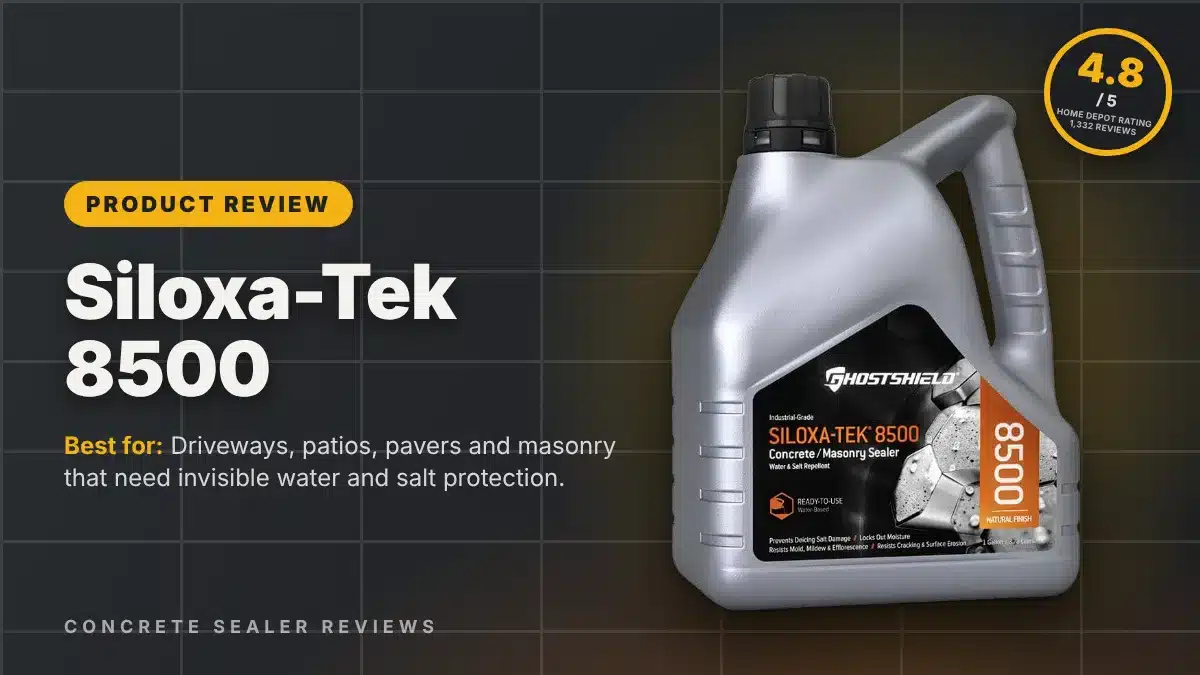
Ghostshield Siloxa-Tek 8500 is a clear, water-based penetrating water and salt repellent for concrete, brick, pavers, stucco and other masonry. It’s aimed at homeowners and contractors who want to protect driveways, patios, garage slabs and walls from water, de-icing salts and freeze-thaw damage without changing the look of the surface. The bottom line: it’s a well-reviewed, easy-to-apply invisible sealer, but it costs more than many alternatives, it doesn’t block oil stains, and it can’t fix cracked or unsound concrete.
| Home Depot rating | ★ 4.8/5 (1,332 Home Depot reviews) |
| Type | Penetrating, non-film-forming water and chloride repellent |
| Chemistry | Water-based silane (isooctyltriethoxysilane) |
| VOC | 90 g/L maximum |
| Finish | Natural flat; milky in the jug, dries clear |
| Coverage | 150–400 sq ft/gal for one coat; 75–200 sq ft/gal for two coats |
| Coats | Two, wet-on-wet |
| Dry/traffic | Dries in about 4–6 hours at 70°F and 50% RH; traffic in 24 hours |
| Cure | Water repellency keeps developing for up to 7 days |
| Best for | Driveways, patios, pool decks, pavers, garage slabs, brick, stucco, block walls |
| Not for | Oil-stain protection, cracked or unsound surfaces, damp slabs over 4% moisture |
| New concrete | After proper cure, typically 14–28 days |
Watch: Siloxa-Tek 8500 in 60 seconds
What It Is / How It Works
Siloxa-Tek 8500 is a silane-based penetrating sealer. Ghostshield's technical data sheet lists the active as isooctyltriethoxysilane, a small silane molecule that soaks into the pores and capillaries of concrete and masonry and reacts there to form a water-repellent lining. It doesn't leave a coating on top, so there's nothing to peel, scuff or yellow, and the surface stays breathable: water vapor can still escape while liquid water and dissolved salts bead up and stay out.
It's still sold at Lowe's, Home Depot and online as a ready-to-use gallon, an "ultra concentrate" gallon that you mix with 4 parts water (distilled is recommended) to make 5 gallons, and in drums. Lowe's lists the ready-to-use version as Model 8500 and notes that it meets DOT minimum active-ingredient levels. Ghostshield markets it with a "100 year warranty." The formal warranty terms are much narrower and limit liability, so read them before you count on that number.
Where It Works Best (and where it doesn't)
It's a good fit for exterior flatwork in climates with freeze-thaw cycles and road salt: driveways, sidewalks, patios and pool decks. It also works on pavers, exposed aggregate, brick, stucco and concrete block. Because it doesn't change the surface appearance or add slip risk, it suits places where a glossy acrylic would be a problem. Owners on Lowe's commonly report easy pump-sprayer or roller application, a clear finish and strong water beading after rain and snow.
It's not the right product if your main goal is keeping oil, grease or car fluids from staining a garage floor or driveway; Ghostshield sells a separate fluorocarbon-boosted version (Siloxa-Tek 8505) for that. Like every penetrating sealer, it won't stop water entering through cracks, failed joints, bad flashing or defective structural waterproofing. The data sheet also requires surface moisture under 4% by weight, so it isn't a fix for a wet slab. For more invisible options, see our best silane-siloxane concrete sealers guide.
Pros
- Invisible, natural flat finish that doesn't change the look or traction
- Breathable and non-film-forming, so it can't peel or delaminate
- Repels water and de-icing salts on a wide range of concrete and masonry
- Water-based and easy to spray or roll
- Concentrate option cuts shipping weight
- Very high owner ratings at Lowe's (4.9/5 across 1,200+ reviews when checked)
Cons
- Price is the most common owner complaint
- No oil or grease repellency (that's the 8505's job)
- Higher VOC (90 g/L max) than some water-based competitors
- Data sheet doesn't publish an actives percentage or a measured penetration depth
- Second coats can puddle if over-applied and need to be brushed out
- Strict conditions: 40–95°F, no rain for 12 hours, dry substrate
How to Apply It
- Prep the surface. Remove oil, grease, curing compounds, efflorescence, paint and old sealers by power washing, acid etching or mechanical scarifying. Neutralize and rinse after any acid, then let it dry.
- Check moisture and weather. Surface moisture should be under 4% with no standing water. Air and surface should be 40–95°F, with no freeze expected within 8 hours and no rain within 12.
- Test a small area. Let it dry 5–7 days before judging the result.
- Mix if needed. Stir well. For the ultra concentrate, mix 1 part concentrate with 4 parts water. Don't dilute the ready-to-use version.
- First coat. Apply to saturation with a roller, brush or low-pressure, non-atomizing sprayer. Let it penetrate 5–10 minutes.
- Second coat. Apply wet-on-wet, using less material. Roll or broom out any puddles.
- Protect and cure. Cover overspray targets (glass, plants, cars). Allow 24 hours before traffic; repellency keeps building for up to 7 days. Clean tools with hot, soapy water.
How It Compares
Versus PROSOCO Saltguard WB: both are water-based penetrating repellents aimed at salt exposure. Saltguard WB lists very low VOC (under 25 g/L) and 5% actives, and is sold mostly through distributors. Siloxa-Tek 8500 is easier to buy at big-box stores and online and uses a two-coat wet-on-wet process.
Versus Ghostshield Siloxa-Tek 8505: the 8505 adds a fluorocarbon for oil and grease repellency. If you're sealing a garage or a driveway where cars drip, it's worth the extra cost. For water and salt alone, the 8500 covers the need.
Versus acrylic sealers: acrylics add gloss and color and resist stains, but they form a film that wears and can get slick. Siloxa-Tek 8500 is the choice when you want protection you can't see. Our best driveway sealer guide compares both types.
FAQ
Is Siloxa-Tek 8500 waterproof?
It's a water repellent: it makes concrete and masonry shed water and resist salt, but it doesn't seal cracks or stop water coming through defects or failed joints.
Will it change the look of my driveway or pavers?
Ghostshield says it dries clear with a natural flat finish that doesn't alter appearance. Most owners report no visible change, though one Lowe's reviewer noted colors "popped" slightly on pavers. Test first.
Can I use it on new concrete?
Yes, once the concrete is properly cured, which Ghostshield puts at typically 14–28 days. Remove any curing compound first so it can penetrate.
Does it stop oil stains?
It's marketed as a water and salt repellent, not an oil repellent. For oil and grease resistance, look at Siloxa-Tek 8505 or a coating.
Verdict
Siloxa-Tek 8500 is a strong option for invisible, breathable water and salt protection on driveways, patios, pavers and masonry. It's easy to apply, widely available and very well rated by owners. The trade-offs are price, a higher VOC ceiling than some water-based rivals, no oil repellency, and a data sheet that leaves out actives and penetration figures. Pick the 8505 if oil stains are a concern.
How we reviewed this product: this is a research-based review built from the manufacturer's technical data sheet and current retail listings. We have not run our own hands-on tests of this product. Details were checked in October 2026; always follow the current label.
Where to Buy

Related Guides
Affiliate disclosure: Some links on this page are affiliate links. As an Amazon Associate we earn from qualifying purchases, at no extra cost to you.
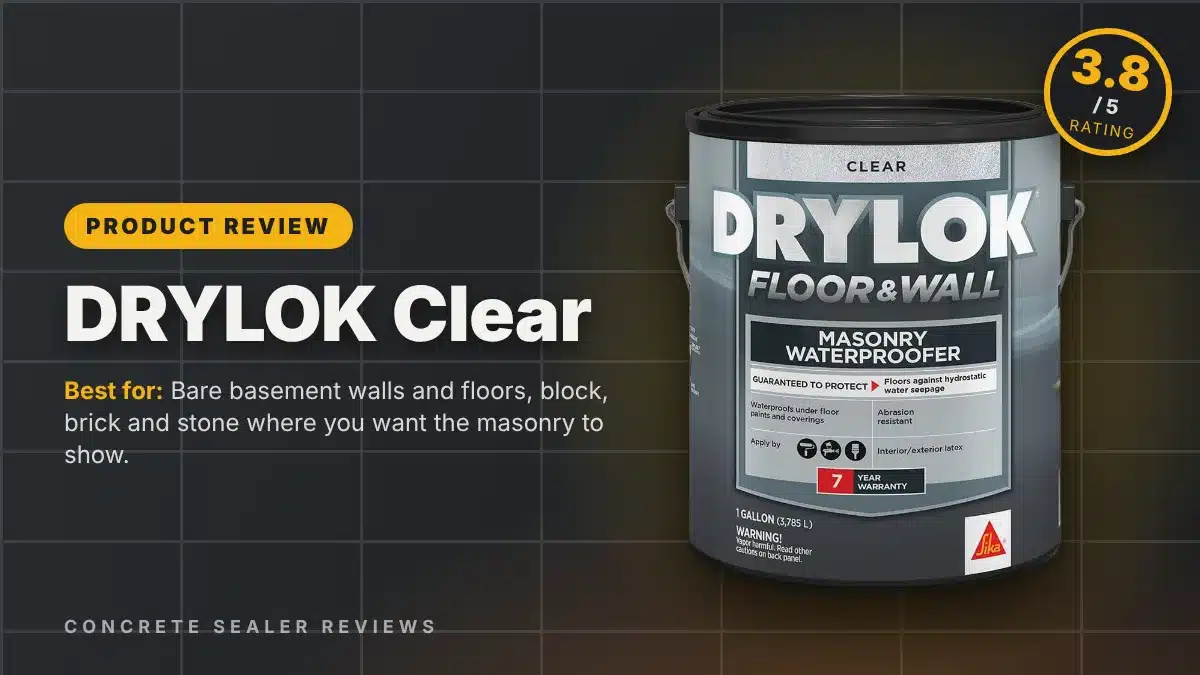
DRYLOK Clear is a clear latex waterproofer for bare concrete and masonry floors and walls. The original name was DRYLOK Clear Masonry Waterproofer, and it’s now sold as DRYLOK Floor & Wall Masonry Waterproofer, still in the 1-gallon (20913) and 5-gallon (20915) sizes. If you want to waterproof a basement wall or floor without hiding the masonry, it’s a solid choice. Keep in mind that it builds a high-gloss film, so it isn’t an invisible penetrating sealer, and it isn’t made for driveways or garage floors that see car traffic.
| Type | Clear film-forming masonry waterproofer |
| Chemistry | Water-based latex, about 30% solids, VOC 100 g/L (retail listing) |
| Finish | Clear, high gloss, non-yellowing |
| Coverage | About 90 sq ft/gal first coat, about 114 sq ft/gal second coat |
| Coats | Two coats required |
| Dry/recoat | Touch dry 2 hours; recoat walls after 2 hours |
| Cure | Light foot traffic 4 hours; heavy foot traffic and floor coverings 24 hours |
| Best for | Basement walls and floors, block, brick, stone, stucco, precast pieces |
| Not for | Vehicle traffic, previously painted or sealed surfaces, a “no-change” look |
| New concrete | Concrete must be dry. Use the plastic-sheet test on the label and let new concrete cure fully first. |
Watch: DRYLOK Clear in 60 seconds
What It Is / How It Works
DRYLOK Floor & Wall is made by United Gilsonite Laboratories (UGL), which is now a Sika company. It's a clear, non-pigmented version of the latex waterproofing chemistry DRYLOK is known for. You roll or brush on two coats, and they dry into a continuous clear film on the surface. That film is what keeps water out, so it works differently from a silane or siloxane repellent, which soaks in and leaves almost nothing on top.
The data sheet says that at the recommended film thickness, the coating resists 4 psi of hydrostatic pressure (ASTM D7088), roughly a 9-foot wall of water. It also resists 98 mph wind-driven rain (ASTM D6904). That 4 psi rating is well below the 10 psi DRYLOK claims for its pigmented Original waterproofer, so the clear version is the lighter-duty option. You choose it because you want the masonry to show through. The film also contains a biocide that resists mold and mildew on the dried coating.
Where It Works Best (and where it doesn't)
It works best on bare interior basement walls and floors where you want to keep the concrete or block look, stop dampness from wicking through and get a surface that's easy to wipe clean. It also suits exterior split-face block, brick, stone and stucco walls that take driving rain, plus decorative precast pieces.
Skip it for driveways and garage floors. DRYLOK says it's not recommended for vehicle traffic, and the glossy film can be slippery when wet. The label offers an optional non-skid additive at 2–4 oz per gallon for that. It's also a poor fit if you want the concrete to look untouched, because it leaves a visible gloss. Active leaks, open cracks and walls with recurring efflorescence need repairs first, and the warranty excludes failures caused by cracked substrates or recurring efflorescence. If you want a penetrating product for outdoor flatwork instead, see our best penetrating concrete sealers.
Pros
- Clear waterproofing film that shows off natural block, brick and stone
- Hydrostatic pressure rating of 4 psi (ASTM D7088) and wind-driven rain rating of 98 mph (ASTM D6904)
- Fast turnaround: recoat in 2 hours, light foot traffic in 4 hours
- Water-based, cleans up with soap and water
- Can serve as a moisture barrier under water-based flooring adhesives or as a base for latex paint
- Transferable 7-year waterproofing warranty when applied per directions
Cons
- Low coverage (about 90–114 sq ft per gallon per coat), so large areas take a lot of product
- High-gloss film changes the look of the surface and can be slippery when wet
- Not for vehicle traffic
- Smooth or troweled floors must be acid-etched or abraded first (ICRI CSP 3–4)
- Lower hydrostatic rating than pigmented DRYLOK waterproofers
- Screws, nails or anchors driven through the coating void the waterproofing
How to Apply It
- Clean. Remove dirt, dust, grease, oil, form release and any paint. If you're removing old paint, follow lead-safety practices.
- Repair. Patch holes and cracks, especially the floor/wall joint. DRYLOK suggests its Fast Plug hydraulic cement.
- Remove efflorescence and open the surface. Use DRYLOK Etch or muriatic acid, then rinse and let it dry. Etch or grind smooth, troweled concrete to roughly medium-grit sandpaper texture. If a drop of water doesn't soak in, etch again.
- Check dryness. Tape a 1 ft x 1 ft piece of plastic to the surface for 24 hours. If moisture shows up under it, keep drying.
- Watch the weather. Air and surface temperatures should be at least 50°F, with no rain coming. Cool, damp or humid conditions slow drying.
- Apply two coats. Stir well and don't thin. Use a brush, roller or sprayer, and don't over-apply. On floors, apply the second coat at a right angle to the first. You can recoat after 2 hours.
- Let it cure. Allow light foot traffic after 4 hours and heavy foot traffic or floor coverings after 24 hours. If a wall still leaks, look for pinholes and add a coat there.
How It Compares
DRYLOK Original Masonry Waterproofer is the pigmented, flat-sheen latex. DRYLOK rates it for 10 psi of hydrostatic pressure, and it comes with a 10-year warranty, but it's white or gray, so it hides the masonry. It's also not made for floors that get foot traffic. Pick Original for leaky walls where looks don't matter and Floor & Wall when you want a clear finish.
Silane/siloxane water repellents soak into the concrete and leave little or no visible film, so they're the better pick for driveways, patios and other exterior flatwork that takes car traffic and freeze-thaw cycles. They aren't built to resist the kind of hydrostatic pressure DRYLOK's film is tested for. Our silane-siloxane sealer guide covers the main options.
Epoxy floor coatings make more sense if you want a durable, cleanable basement or garage floor that can take heavier wear. See our epoxy floor coating picks.
FAQ
Is DRYLOK Clear the same as DRYLOK Floor & Wall?
Yes. DRYLOK's current data sheet lists Floor & Wall Masonry Waterproofer as "formerly Clear Masonry Waterproofer," and retailers still sell it under the 20913 (1 gallon) and 20915 (5 gallon) item numbers.
Is DRYLOK Clear waterproof?
Yes, as long as you reach the recommended film thickness. Two coats, about 16 wet mils in total, are rated to resist 4 psi of hydrostatic pressure. If the coats are thin, or if the substrate is cracked or holding efflorescence, you won't get that rating.
Can you use DRYLOK Clear on a garage floor or driveway?
DRYLOK doesn't recommend it for vehicle traffic. For a garage, a coating made for tires holds up better. For a driveway, a penetrating repellent is the better choice.
Can you put DRYLOK Clear over paint or an old sealer?
No. It's made for bare masonry, and the prep instructions say to remove paint first. Remove the old coating or choose a different product.
Verdict
DRYLOK Floor & Wall, formerly DRYLOK Clear, is a good clear waterproofer for basement walls, floors and exterior masonry, as long as a glossy film is fine with you. It recoats quickly and has real ASTM ratings behind it. The drawbacks are low coverage, a finish that can get slippery, no vehicle traffic and the need for careful etching and dryness checks. You can see the current specs on the DRYLOK product page. Our rating: 3.8/5
How we reviewed this product: this is a research-based review built from the manufacturer's technical data sheet and current retail listings. We have not run our own hands-on tests of this product. Details were checked in October 2026; always follow the current label.
Where to Buy


Related Guides
Affiliate disclosure: Some links on this page are affiliate links. As an Amazon Associate we earn from qualifying purchases, at no extra cost to you.
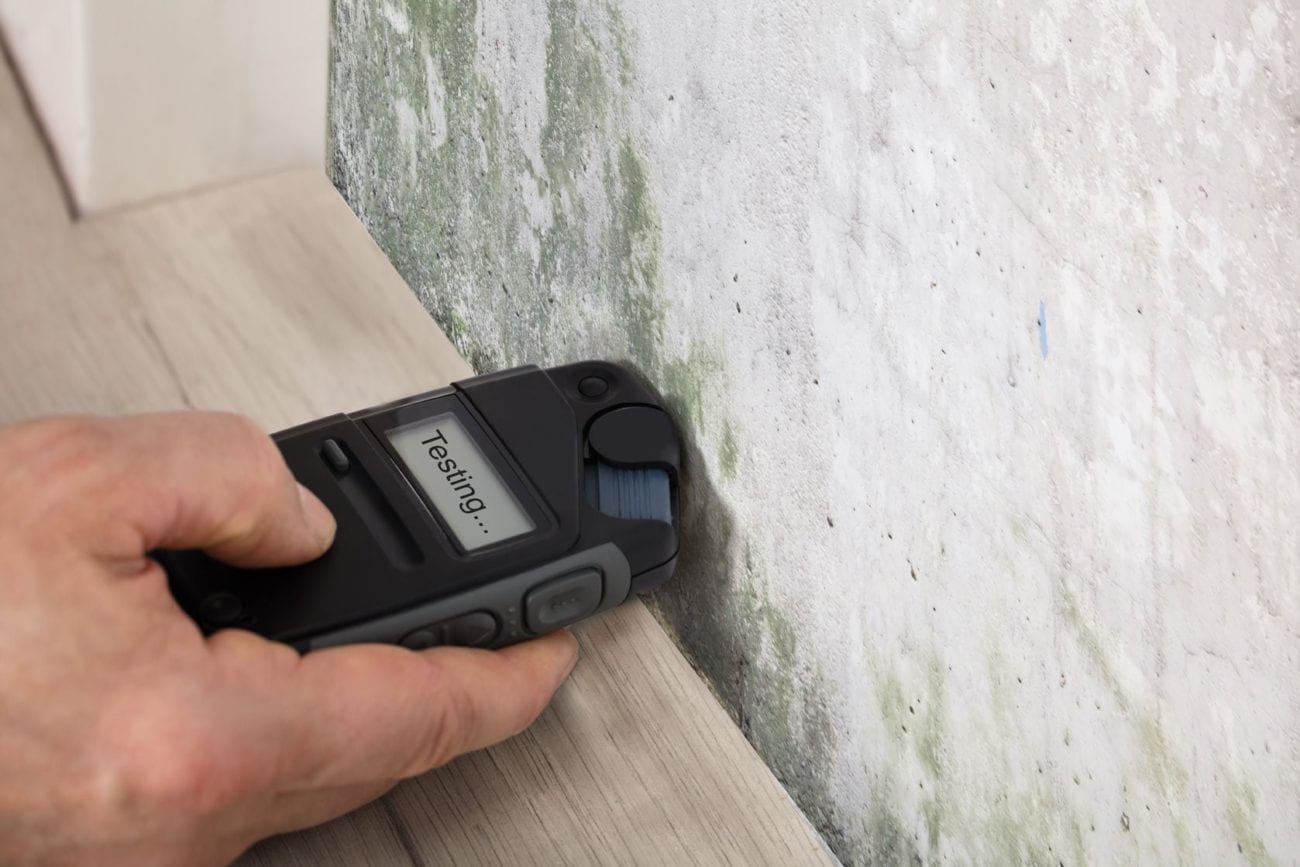
Moisture is the most common reason concrete sealers and floor coatings fail. Too much moisture moving up through a slab can make epoxy blister, acrylics turn white, and flooring adhesives let go. Testing before you seal, coat or install flooring tells you whether the slab is ready.
Why Concrete Holds Moisture
Water is part of every concrete mix, and new slabs can take weeks or months to dry out. Slabs on grade, especially basements without a vapor barrier, can also wick moisture up from the ground indefinitely. A certain amount of moisture is normal. The goal of testing is to find out whether there is more than your sealer, coating or flooring can tolerate.
Method 1: Plastic Sheet Test (Quick Check)
This simple test (based on ASTM D4263) gives a yes/no indication of moisture.
- Tape an 18″ x 18″ sheet of clear plastic tightly to the floor on all four edges.
- Leave it for at least 16 hours (24 is better).
- Lift it and check. Condensation under the plastic or a darkened slab means moisture is coming through.
It’s quick and free, but it isn’t quantitative. Use it to decide whether more precise testing is needed.
Method 2: Calcium Chloride Test
The calcium chloride test (ASTM F1869) measures the moisture vapor emission rate (MVER), the pounds of moisture released per 1,000 sq. ft. over 24 hours. You seal a dish of calcium chloride under a plastic dome on the slab for about three days, then weigh it to see how much moisture it absorbed. Kits are inexpensive and widely available.
Method 3: Relative Humidity (RH) Probes
The most accurate method (ASTM F2170) measures relative humidity inside the slab. You drill a small hole to a set depth, insert a probe sleeve, let it equalize, and take a reading. Most flooring and coating manufacturers now specify a maximum RH reading, so this is the test to use before installing an epoxy coating or flooring.
What to Do If the Concrete Is Too Wet
- Give new concrete more time to dry, with heat and air movement if indoors.
- Fix drainage, grading and gutters that send water toward the slab.
- Use a coating system rated for higher moisture, such as a moisture-mitigating epoxy primer.
- For basements, a penetrating water repellent or densifier can reduce dampness. See best sealer for basement waterproofing.
Always compare your results with the limits on the product’s technical data sheet; acceptable moisture levels vary by product.
Frequently Asked Questions
Do I need to test moisture before sealing outdoor concrete?
Usually not with breathable penetrating sealers, as long as the surface is dry. Testing matters most before film-forming coatings and indoor flooring.
Can a sealer stop moisture from coming through a slab?
Penetrating sealers reduce water absorption, but they don’t stop vapor pressure from below. High-moisture slabs need moisture mitigation, not just a sealer.
Check Price on Amazon
Related Guides

Related Guides
Affiliate disclosure: Some links on this page are affiliate links. As an Amazon Associate we earn from qualifying purchases, at no extra cost to you.
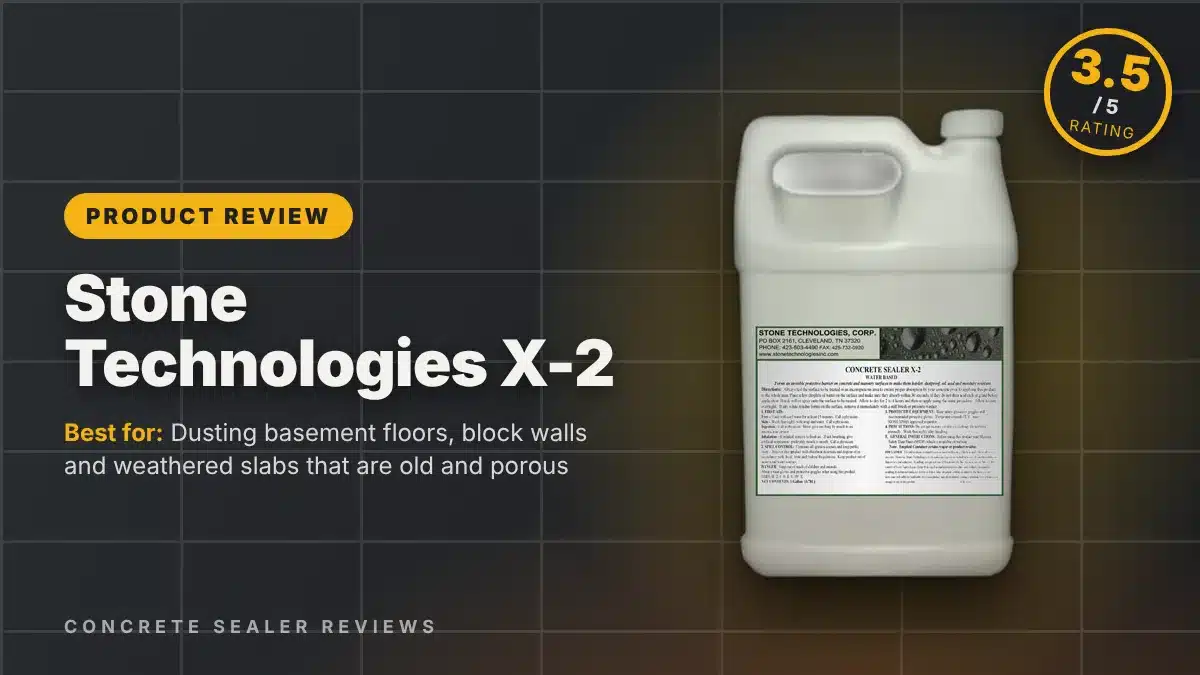
Stone Technologies Concrete Sealer X-2 is a water-based silicate densifier and hardener, the more concentrated version of the company’s X-1. It’s meant for old, porous, dusty concrete and block. It reacts inside the concrete to tighten and harden the surface, and it doesn’t leave a coating on top. It’s a reasonable pick for dusting basement floors and weathered slabs. Don’t expect water beading or stain repellency from X-2 alone. Some of the bigger marketing claims also lack published test data.
| Type | Penetrating densifier/hardener |
| Chemistry | Water-based silicate (sodium silicate); solvent-free, no VOCs claimed |
| Finish | Natural, no sheen; may darken the surface slightly |
| Coverage | About 200–400 sq ft/gal per coat, depending on porosity |
| Coats | Two, 2–4 hours apart |
| Dry/recoat | Recoat in 2–4 hours; keep dry and rain-free for 24–48 hours |
| Cure | Reaction continues for up to 28 days; foot traffic allowed during that time |
| Best for | Old, porous or dusting concrete; block; basement floors and walls; efflorescence-prone slabs |
| Not for | Decorative, colored, stamped or exposed-aggregate concrete (unless the maker approves) |
| New concrete | Apply only to fully cured concrete, normally 28 days |
Watch: Stone Technologies X-2 in 60 seconds
What It Is / How It Works
Stone Technologies Corp. still sells X-2 under the same name on its own site, in sizes from 1 quart to 55-gallon drums. Some marketplace listings call it "Silicate Based Hardener Densifier Concrete Sealer X-2." Like other silicate densifiers, it soaks into the concrete and reacts with the calcium hydroxide (free lime) left over from cement hydration. That reaction forms extra calcium silicate hydrate in the pores. The result is a surface that's harder, less porous and less likely to dust, and that resists abrasion and some chemicals better.
Because X-2 doesn't form a film, the surface stays breathable, isn't slippery and can still take paint. The maker says it can also bond to adhesives and epoxy coatings after a mild etch. The flip side is that a densifier isn't a water repellent. One long-term buyer review noted that water doesn't bead on the treated surface. Stone Technologies also sells X-3, a separate silane/siloxane repellent that's marketed for use alone or over X-1 or X-2 for added water and stain repellency.
The maker also claims X-2 reduces radon, stops efflorescence, increases strength (one listing says "up to 30%") and is guaranteed for the life of the concrete. We didn't find published test data or guarantee terms for these claims, so treat them as marketing until the company provides the details.
Where It Works Best (and where it doesn't)
It works best on concrete more than about ten years old that's porous, dusting, spalling at the surface or showing seepage and efflorescence. Typical spots are basement floors, block foundation walls, worn garage floors and weathered outdoor slabs. It can also be used as a prep step under paint or coatings, after the light etch the maker recommends.
It's not the right choice for decorative work. Stone Technologies doesn't recommend it for colored, stamped or exposed-aggregate concrete without checking with them first. It also won't give a wet look, and it won't keep oil or water from soaking into a driveway the way a repellent would. Dense, smooth or previously sealed concrete that won't absorb a drop of water in 20–30 seconds has to be etched before X-2 can get in. For repellency on exterior slabs, see our silane-siloxane sealer picks.
Pros
- Densifies and hardens porous, dusting concrete without a surface film
- Invisible, non-slip, breathable finish
- Water-based and solvent-free, with low odor
- Paintable, and can be used under epoxy after a light etch
- Wide range of sizes, from quarts to drums
Cons
- Not a water or stain repellent by itself; you need a second product such as X-3 for that
- No published test data for the radon, strength or efflorescence claims
- Terms of the lifetime guarantee aren't spelled out
- Not recommended for decorative, colored, stamped or aggregate concrete
- Narrow weather window (40–80°F, no rain for 48 hours)
- Sold mainly direct and online, with few retail reviews
How to Apply It
- Confirm the concrete is cured. Wait the normal 28 days after pouring.
- Clean. The surface must be free of standing water, oil and dust.
- Do a water test. Water drops should soak in within 20–30 seconds. If they bead, etch the surface first. The maker suggests its Eco Concrete Etcher.
- Pick your weather. Apply between 40°F and 80°F, with no rain forecast for at least 48 hours. Avoid direct hot sun if you can. One long-term buyer reported that the sealer flashed off quickly in sun and had to be reapplied.
- First coat. Use a 3/8" nap roller or a low-pressure pump sprayer. Wet the surface until it looks evenly wet, without puddles. Wipe up any excess with a clean, dry towel.
- Second coat. After 2–4 hours, repeat the same way.
- Let it cure. Keep the surface dry for 24–48 hours. The reaction keeps going for up to 28 days, and the maker says foot traffic won't harm it during that time.
How It Compares
Stone Technologies X-1 works the same way and uses the same application steps, coverage and reactions as X-2. X-2 is the more concentrated version, so it's the one to choose for very porous or deteriorated concrete.
Lithium silicate densifiers are the other common densifier chemistry, often chosen for interior floors and polished concrete. Like X-2, they harden the surface but don't add much water repellency.
Silane/siloxane repellents, such as Eagle Natural Seal or Sikagard-400 Enviroseal, work the other way around. They make water bead and slow chloride intrusion, but they don't harden a dusting surface. On exterior flatwork that sees deicing salt, a repellent, or a densifier followed by a repellent, is usually a better plan than a densifier alone. Our best penetrating concrete sealers covers both types.
FAQ
Is Concrete Sealer X-2 waterproof?
Not on its own. The maker says it reduces porosity and water permeability, but it isn't a repellent coating, so water won't bead. For water repellency, top it with a silane/siloxane product.
Does X-2 stop radon?
Stone Technologies says it helps reduce radon, but we found no published test data. Sealing slabs can be one part of radon reduction, but test your home and follow EPA guidance, which typically centers on active mitigation systems.
Can you paint or epoxy over X-2?
The maker says yes. It's paintable, and it accepts adhesives and epoxy coatings after a mild etch. Confirm with your coating manufacturer before you start.
How long does X-2 last?
Silicate densifiers react inside the concrete and don't wear off the way a film does, and the maker guarantees X-2 for the life of the concrete. Any repellent top coat you add will need periodic reapplication.
Verdict
Concrete Sealer X-2 is a straightforward, solvent-free silicate densifier. It makes sense for hardening old, porous or dusting concrete and block, and it can serve as a base for paint or coatings. Don't count on it for water or stain repellency by itself. Its radon and strength claims would be more convincing with published data. Details are on the Stone Technologies X-2 page. Our rating: 3.5/5
How we reviewed this product: this is a research-based review built from the manufacturer's technical data sheet and current retail listings. We have not run our own hands-on tests of this product. Details were checked in October 2026; always follow the current label.
