
Affiliate disclosure: Some links on this page are affiliate links. As an Amazon Associate we earn from qualifying purchases, at no extra cost to you.
What are the best decorative concrete sealers?
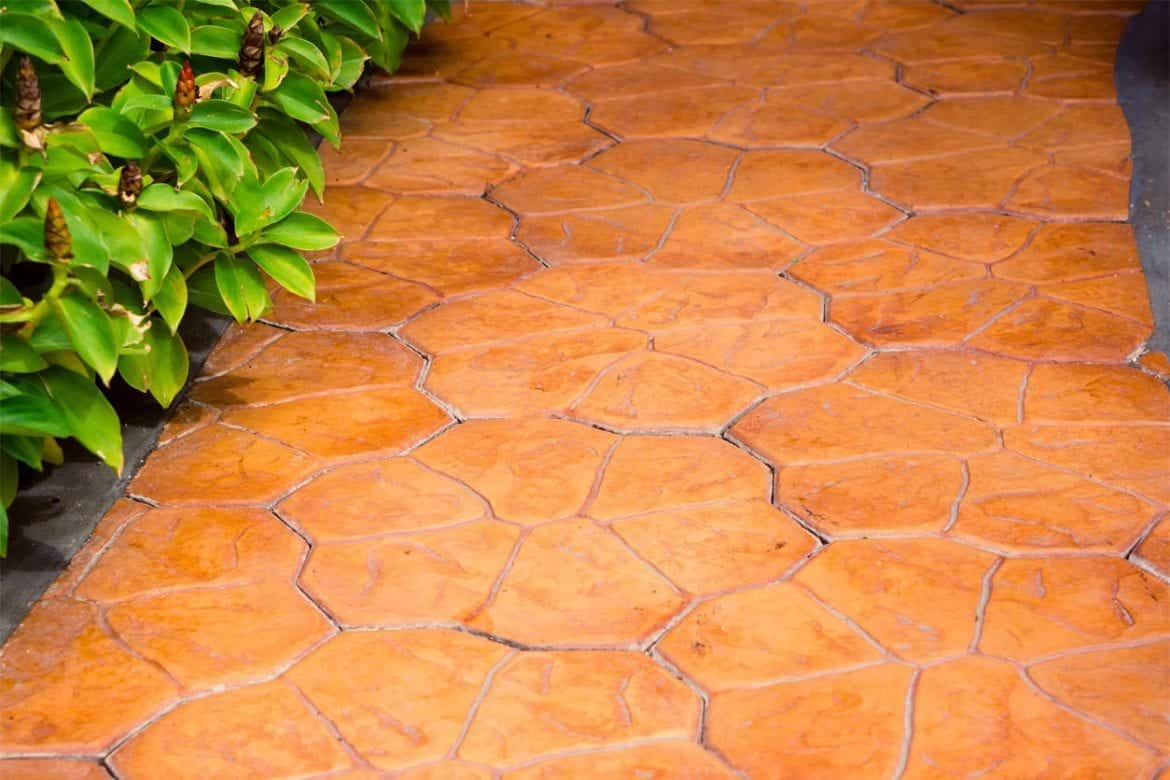
Concrete primarily tends to be functional: strong, gray material that is dull while getting the job done. This is rarely a problem because we don’t really tend to care about what our foundations look like. Concrete doesn’t have to be this way, however, which leads people desiring something more visually appealing to turn to decorative concrete.
The current trend is for homeowners and contractors to try to liven up their otherwise drab concrete surfaces. Many people turn to pavers to get the tropical look they want, even in the frigid Northeast. Others try out concrete dyes, mixing and matching colors to create a vibrant visual atmosphere. Ultimately, though, it is important to protect this decorative concrete as you would (and should) with your regular concrete surfaces.
The materials you should use to protect decorative concrete will differ from those you would use when you don’t care about the surface color. Decorative concrete is typically more delicate than non-decorative – the material is NOT weaker, but you care more about the color and physical appearance of your surfaces, which means you need to go to greater lengths to protect that visual exterior.
Acrylic-based sealers tend to be a good idea when sealing decorative concrete. These sealers do not penetrate past the surface of the concrete, instead hardening over the surface to prevent water leakage and spills from marring the face of the material. Because they are not penetrative, they do not have the tangible benefits of a traditional penetrating sealer (such as locking out mold and mildew, as well as resisting efflorescence). However, the places in your home or business where you would use decorative concrete typically aren’t as threatened by these calamities as, say, a basement.
The acrylic-based sealer will not penetrate beneath the surface, but it will still provide excellent protection without damaging the physical appearance of your concrete. Penetrating sealers delve deep within the concrete to react chemically below the surface, which would ruin any sort of dye or intentional coloring already within the material. The large particles of acrylic-based sealers will ensure the substance remains atop the surface.
It is important, however, to purchase a high-quality sealing product when protecting your decorative concrete. A lesser-quality product could ruin the color quality you just spent so much time and effort perfecting.
Our Take: For a readily available, water based decorative acrylic sealer we like this one found at HomeDepot.com
Check Price on Amazon
Related Guides

Affiliate disclosure: Some links on this page are affiliate links. As an Amazon Associate we earn from qualifying purchases, at no extra cost to you.
What is the best penetrating concrete sealer?
If the primary concern for your concrete is to protect it, waterproof it, prevent concrete dusting, and resist staining without worrying about having the latest cosmetic finish, then a penetrating sealer may be what you are looking for. Why do you ask? Well, it is assumed that the main reason people want to apply a coating or covering to an interior or exterior floor is to make it look nice. But if you are not concerned about how nice it looks, but rather how well it performs without a lot of expense and preparation then a penetrating sealer is your best bet.
What makes silanes, siloxanes, and siliconates different than other coatings is the fact that they actually penetrate (hence the name) into the concrete to create a protective barrier. Other sealers such as acrylic, epoxy, and polyurethanes are topical in nature. Which means they sit on the surface and form a protective film or coating. A silane, siloxane and siliconate sealer works by impregnating the concrete forming a hydrophobic surface barrier. In essence, water and liquids will bead and resisting stains and the concrete surface also becomes more resistant to wear.
Additional benefits to consider include resistance to mold and mildew and protection from deicing salts. A penetrating sealer also has the added benefits of freeze thaw protection, pitting and spalling. Since the sealer is clear with a natural looking finish without any sheen, it has the same anti-slip protection as bare concrete.
Other factors to consider about a penetrating sealer are expense and ease of application. These sealers are usually priced quite reasonable and since they are long lasting (10 years or so) sealers. Also application of a penetrating sealer is much easier than applying a coating or even painting for that matter.
Our take: If you want to protect your concrete with minimal preparation and expense, then a silane/siloxane, or siliconate penetrating sealer is definitely worthy of your consideration. We like this one from HomeDepot.com.
Check Price on Amazon
Related Guides

What is a concrete densifier, and what is the best concrete densifier? According to the Internet, “A concrete densifier is a chemical applied to a concrete surface in order to fill pores, increasing surface density. Chemical densifiers are used on polished and non polished slabs to reduce dusting and wear; on polished concrete surface densifiers help concrete take a better polish and make the surface less permeable to liquids so the slab does not require sealing.”
Now lets explore this: Why would you need a concrete densifer in the first place? Concrete is composed of three ingredients, Portland cement, aggregate and water. It may seem simple but concocting the exact ratio of these three components is tougher than you think. If the proportions are even slightly off it will result in weakened concrete that will begin to deteriorate. After concrete is poured it solidifies and hardens through a chemical process called hydration. Water reacts with the cement and causes all of the ingredients to bond together. If too much water was added to the mix and the water-cement ratio is off, the aggregate will begin to separate from the cement paste. If water is not fully absorbed through hydration some of it may evaporate as it hardens resulting in bleeding that will reduce the final strength of concrete. A mix with too much water will also experience increased shrinkage and visible cracks which will also affect the strength of concrete. That being said when you buy a home that already has a poured concrete basement, driveway, patio etc. you do not know what the water-cement ratio was when poured. In most cases since the ratio is so difficult to perfect it is adequate to assume your concrete will weaken with time.
By applying a concrete densifier you are permanently closing the pores in the concrete thus in fact hardening the concrete and making it stronger. There are a few types of concrete densifiers on the market today. The oldest and most popular being silicate based densifiers. They can include sodium silicates, potassium silicates, lithium silicates or a combination. Silicate densifiers are chemically reactive sealers that penetrate and react with calcium silicate hydrate or C-S-H. C-S-H is the same material that is produced in the reaction between Portland cement and water giving concrete much of its original strength. When a densifier is applied to the surface of concrete the silicate begins to immediately react with the calcium hydroxide. Not only does densifying begin but the once empty pores of the concrete are filled creating a tougher, stronger concrete slab. But beware silicate sealers are known to leave a white residue called carbonation on the surface (When silicate left on the surface that did not penetrate reacts with carbon dioxide in the atmosphere.) This is often times difficult to remove. A newer technology on the market is a colloidal silica densifier. It is claimed that colloidal silicas are the silicates of the future since they have a low viscosity, penetrate deep and also react with lime found in concrete. Since colloidal silicas have the ability to bond to itself (silicate sealers cannot do this) it can densify stronger and has the ability to bond to cement products not made from regular Portland cement. It is claimed colloidal silica is safer to use than traditional silicates and since there are small amount of metallic salts compared to silicates, there will never be whiting left on the surface. Application is quicker (the slab is dry in 1-2 hours vs. 6-24 hours.) But which densifier is the best choice?
Our take : Best Concrete Densifiers
When it comes to silicate sealers we feel the best densifier and hardeners are lithium based. Since lithium silicates will react with calcium hydroxide present in concrete to produce the same molecule that concrete naturally forms to hold itself together (C-S-H) we feel this is the strongest, most durable densifier. They have a faster dry time than sodium silicate densifiers and they are a cost effective solution to harden concrete.
