

Related Guides

Cure and seal products are a great way to protect and cure a new slab of concrete. While concrete is known to be strong and durable, nigh indestructible, it does not just appear that way. Instead, it goes through a long and delicate process of mixing and curing that gives it its strength. If you see cracked, crumbling concrete, it is likely that the concrete has actually been poorly mixed and cured. The easiest way to avoid this is to make sure your concrete cures properly.
Concrete is mixed with Portland cement, water, and some sort of aggregate, like gravel or sand. Once mixed, it is poured and spread out, according to the project’s needs. However, after it has been poured, the concrete needs to cure for the proper amount of time. The key to curing is to maintain a consistence level of moisture and temperature, which helps the concrete gain most of its potential strength. Without a proper curing process, the concrete will never be as strong as it could be, and it will manifest problems later in its life.
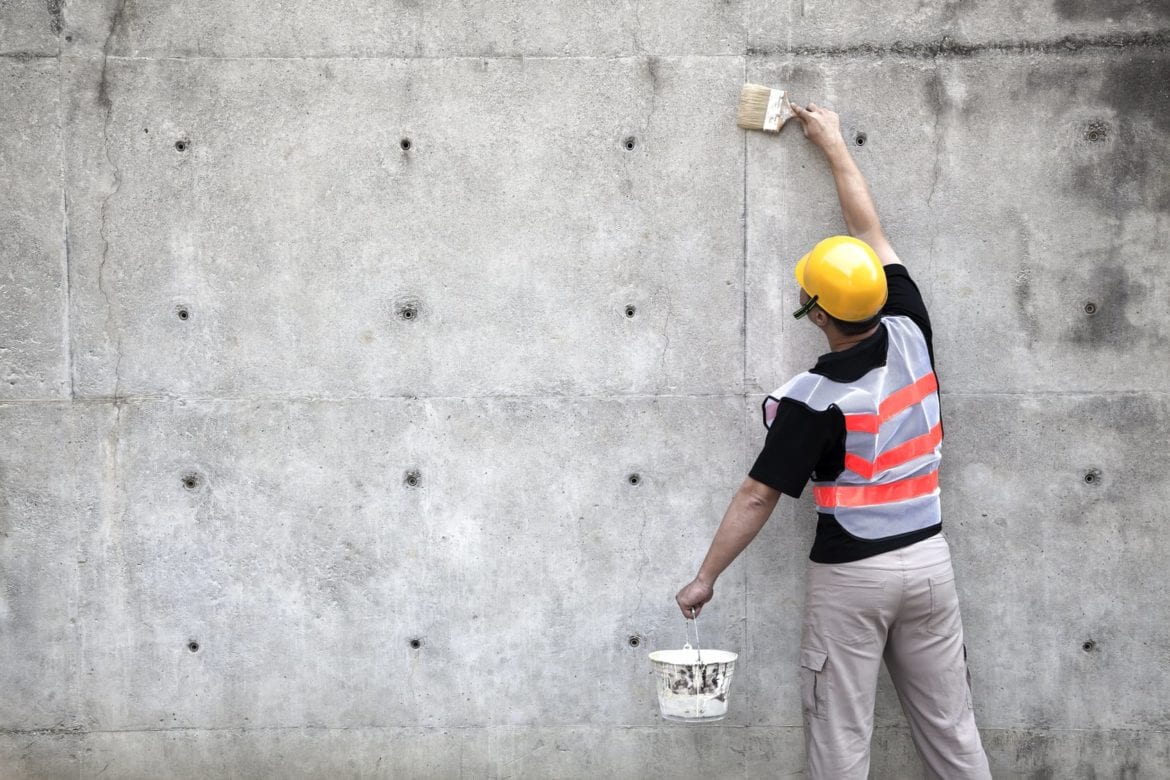
A cure and seal is a product that provides a membrane over the top of freshly poured concrete. This membrane helps retain the proper amount of moisture while keeping the concrete at an adequate temperature for the curing process to be at its most effective. While the curing process is traditional done with burlap sacks or tarps and a consistent stream of water, cure and seal products are relative newcomers to the stage.
The biggest advantage to cure and seal products is that they provide a layer of protection for your concrete above and beyond what a traditional curing process will give. Typically, once the concrete is cured after the thirty-day period, it is ready to be used, though it is not protected from stains and negative effects of weathering. However, concrete treated with a cure and seal process is cured and sealed, just as the name implies. That means that the concrete actually comes into the world sealed, protected from potential disasters in the early stages of its life. While the seal will have to be renewed some years later, depending on the cure and seal product used, as well as a variety of other factors, the concrete will be able to repel stains and increase its longevity at crucial stages in its existence.
Our Take: Some excellent cure and seal sealers include Iso-Cure C309
Related Guides

Affiliate disclosure: Some links on this page are affiliate links. As an Amazon Associate we earn from qualifying purchases, at no extra cost to you.
One of the most compelling reasons to use a concrete sealer is to help improve the aesthetics features of the slab, pavers, bricks or stone. Decorative concrete has become extremely popular and can be seen used in driveways and patios, interior and exterior floors, steps and walkways, pools and more. Now what is the best method of protecting all of these surfaces?
An acrylic concrete sealer would be you best option. Acrylic sealers come in water-based versions and solvent based versions. The biggest difference between the two is the VOC content, sheen and life of the product; meaning how often it lasts before needing to be reapplied. Solvent based acrylics tend to have higher VOC’s and solvent odors; however, they leave a higher gloss shine and last a few years longer than water based versions. Solvent-based sealers tend to be the strongest options when you are sealing an exterior substrate, or patio. When applying an acrylic sealer outdoors make sure that the manufacturer states their product is UV stable. If an acrylic is not UV stable and is used outdoors there are high risks of yellowing, peeling and flaking from the sun’s strong, harmful rays. Although solvent based sealers are great for exterior, decorative concrete be aware that they can make surfaces extremely slippery. They may add a beautiful high gloss finish, but if applied to a pool deck they could cause excessive slipperiness. Some manufacturers offer additives (to be used in conjunction with the sealer at the time of application) that help make the surface less slippery.
If you do not want a slippery high gloss surface you should consider a water based concrete sealer. They may need to be re-applied more frequently but they usually meet all VOC regulations and will offer a softer matte or satin sheen. Water based acrylic sealers usually last 1-3 years before needing to be re-applied compared to 2-5 years you would get from a solvent based concrete sealer.
Acrylic concrete sealers are one of the most common concrete sealers on the market today. Just be sure when you are shopping around that the sealer is a pure acrylic and not a blend of an acrylic and something else. Acrylic sealers are great for stamped decorative concrete patios, driveways and pavers and really do beautify and enhance concrete’s aesthetic appearance.
Our Take: We like Cryli-Tek 5505 with a nice wet-look that is non-yellowing and long lasting.
Check Price on Amazon
Related Guides

Affiliate disclosure: Some links on this page are affiliate links. As an Amazon Associate we earn from qualifying purchases, at no extra cost to you.
Water is concrete’s biggest enemy. It carries salts and chlorides into the slab, where they corrode reinforcing steel and cause spalling and cracking, and in basements it feeds mold, mildew and musty odors. A good waterproofing sealer greatly reduces how much water concrete absorbs. Be wary of any product that promises to waterproof concrete permanently, though: no sealer can guarantee that.
Penetrating Sealers vs. Surface Coatings
Many “waterproofing” products are elastomeric, latex or acrylic coatings that sit on top of the concrete like a raincoat. They help at first, but water can get behind them from below or through cracks, and the film eventually bubbles, peels or flakes.
Penetrating sealers, including silanes, siloxanes, silane/siloxane blends and silicates, soak into the pores and react inside the concrete. They block liquid water while still letting the slab breathe, so there’s no film to peel. For lasting water protection, a penetrating sealer is the better choice. Learn more in best penetrating concrete sealers.
Our Pick: Lithi-Tek 9500
Our favorite concrete waterproofer is the Lithi-Tek 9500, an invisible penetrating sealer that densifies concrete and makes it water repellent.
- Water beading: rain beads up and rolls off treated surfaces instead of soaking in.
- Less moss and algae: helps limit growth in damp, shaded areas.
- No change in look or traction: it leaves no film, so the surface isn’t slick.
- Long life: because it works inside the concrete, it only wears away if the concrete surface wears away.
Coverage and cost
The 9500 is a concentrate: one gallon covers about 1,000 sq. ft. per coat, and two coats are recommended, so plan on about 500 sq. ft. per gallon. That’s roughly $0.10 per square foot per application, far less than the cost of replacing concrete.
Where to buy
Available direct from the manufacturer, on Amazon, at Home Depot and at Lowe’s.
How to Get the Best Results
- Clean the surface and let it dry completely. See how to clean concrete before sealing.
- Apply in dry weather, within the temperature range on the label.
- Apply two coats as directed rather than one heavy coat. See how to apply concrete sealer.
- Check your concrete each season for efflorescence, cracks or discoloration.
Waterproofing a Basement?
Basements have their own challenges, including hydrostatic pressure and moisture coming up through the slab. See best concrete sealer for basement waterproofing and basement waterproofing explained.

Related Guides

Affiliate disclosure: Some links on this page are affiliate links. As an Amazon Associate we earn from qualifying purchases, at no extra cost to you.
When looking for a concrete sealer, you have to narrow down your choices from the initial level of surface versus penetrating sealers. Next, if you choose penetrating sealers, you must choose between silicate-, siliconate-, or silane/siloxane-based concrete sealers. If you decide to use a silane/siloxane sealer, you finally need to choose which of those you want to use. Silanes and siloxanes are both derived from the silicone family. Despite being very closely related, they have significant performance differences. Because silanes are made up of smaller molecules than siloxanes, they typically will obtain deeper penetration than siloxanes. As a result, silanes perform well under abrasion and weathering conditions. A consequence, however, of this small molecular size is that silanes are relatively volatile. Therefore, the solids content of a silane product should be high enough to compensate for the loss of reactive material through evaporation during application and cure. Siloxanes, because they are less volatile, generally offer good water repellent performance at lower costs. However, for concrete surfaces subjected to abrasive wear, treatment with a silane sealer will provide longer lasting protection. In regard to surface texture and color, treatment with silane sealers typically cannot be detected visually. Siloxane products may slightly darken the treated surface. Manufacturers have since realized that the disadvantages can be mitigated with a special blend of the two. While there are many poorly blended silane/siloxanes on the market, there are some high-quality ones that offer a unique blend of penetrating and surface protection. When choosing a silane/siloxane sealer, you want to look for a product that is water-based with a low VOC content. These will be easier and safer to apply, with fewer fumes and less flammability. You also want to use a product that is water repellent, such that the water will bead on the surface of your concrete. If the water doesn’t bead, then you can’t know if the siloxane part of the blend is properly working. If it is not properly working, it means the manufacturer has likely messed up the blend. Our Take: We like the salt, chloride, freeze-thaw and water protection from the Siloxa-Tek 8500 and Okon S40.Check Price on Amazon
Related Guides
Affiliate disclosure: Some links on this page are affiliate links. As an Amazon Associate we earn from qualifying purchases, at no extra cost to you.
What are the best silicate concrete sealers?
When you’ve decided on a penetrating concrete sealer, maybe for a project like a garage, a driveway, or a basement made of traditional concrete, you no longer have to consider surface sealers like acrylics, urethanes, and epoxies. However, there are a few different choices at the level of penetrating sealers.
Silicate sealers are the a common choice for densification. They are a high quality, dependable choice of penetrating sealer. They are made up of small particles of silicate, a material that will penetrate past the surface pores of the concrete to react chemically within the concrete to create CSH. CSH, or calcium silicate hydrate, is a naturally occurring mineral within the concrete that provides its strength. However, concrete is naturally porous with a large number of air pockets. With a penetrating sealer delivering silicate into the concrete, the silicate will react chemically with the calcium, free lime, and various alkalis within the concrete to create more CSH, which increases the concrete’s strength.
A silicate sealer is made up of silicate suspended in a type of carrier, typically a sodium. That is why you see sodium silicate sealers everywhere on the market. These are excellent choices, but a newcomer to the field is the lithium silicate sealer. The difference is that the carrier, which only functions to transport the silicate into the concrete, is lithium instead of sodium. Keep in mind that silicates both sodium and lithium do not offer any type of waterproofing protection.
Our Take: Silicate densifiers we like are Lithi-Tek 4500 and The Ashford Formula.
Check Price on Amazon
- Lithi-Tek 4500 Penetrating Densifier & Hardener (1 gal.)
- Ashford Formula Concrete Densifier (5 gal.)